

 English
  中文简体
中文简体 


Industry Knowledge
Material Grades and Heat Treatment Processes in Hardware Kits
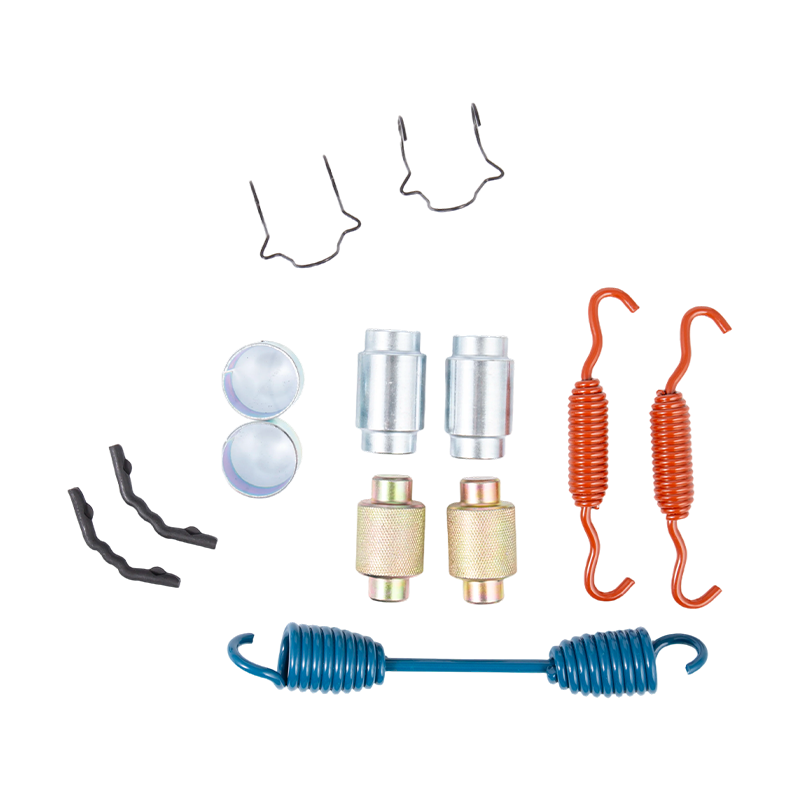
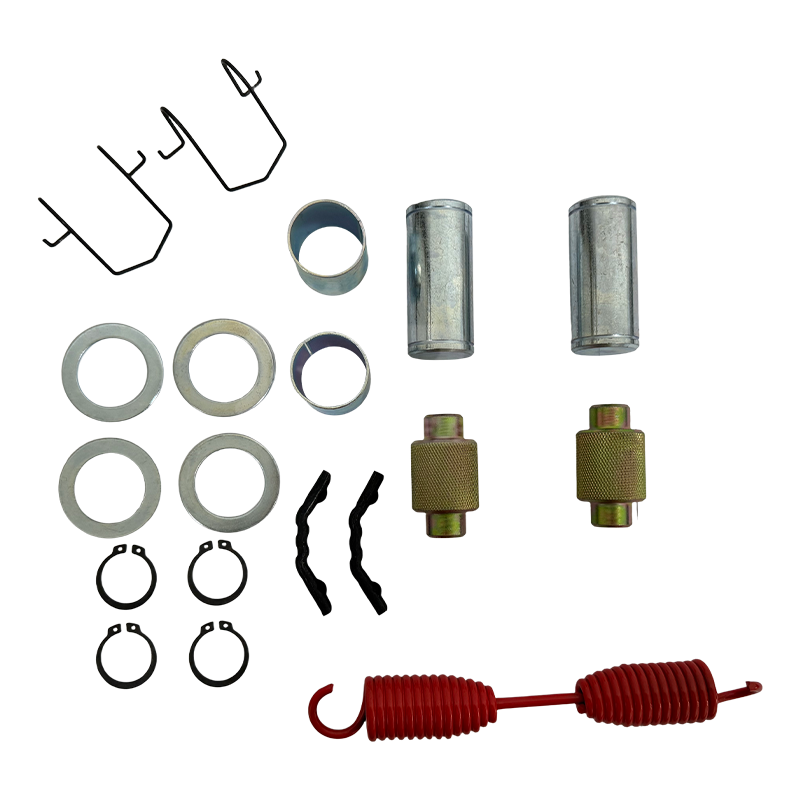
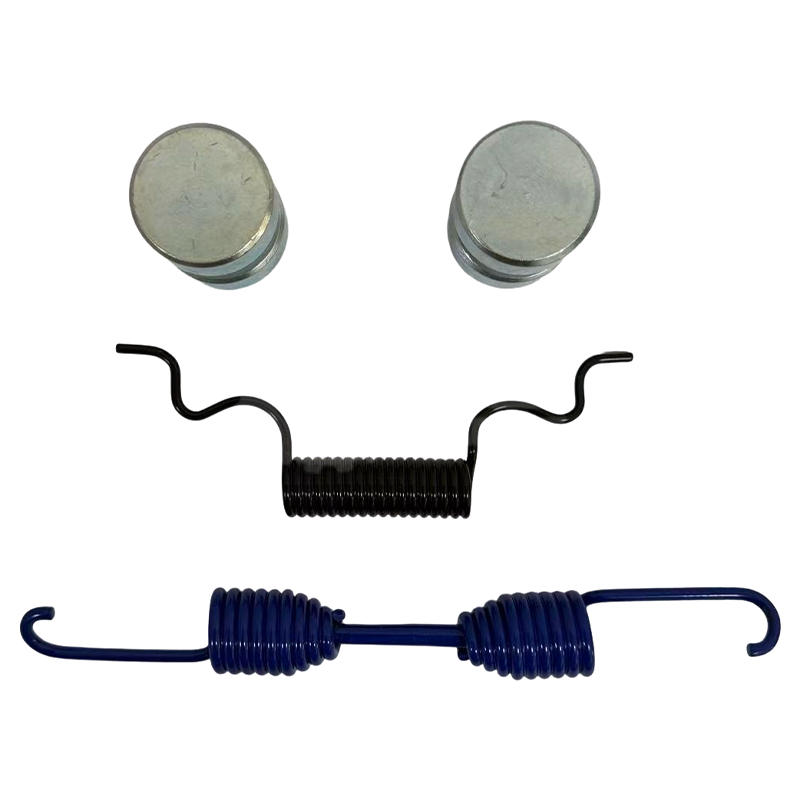
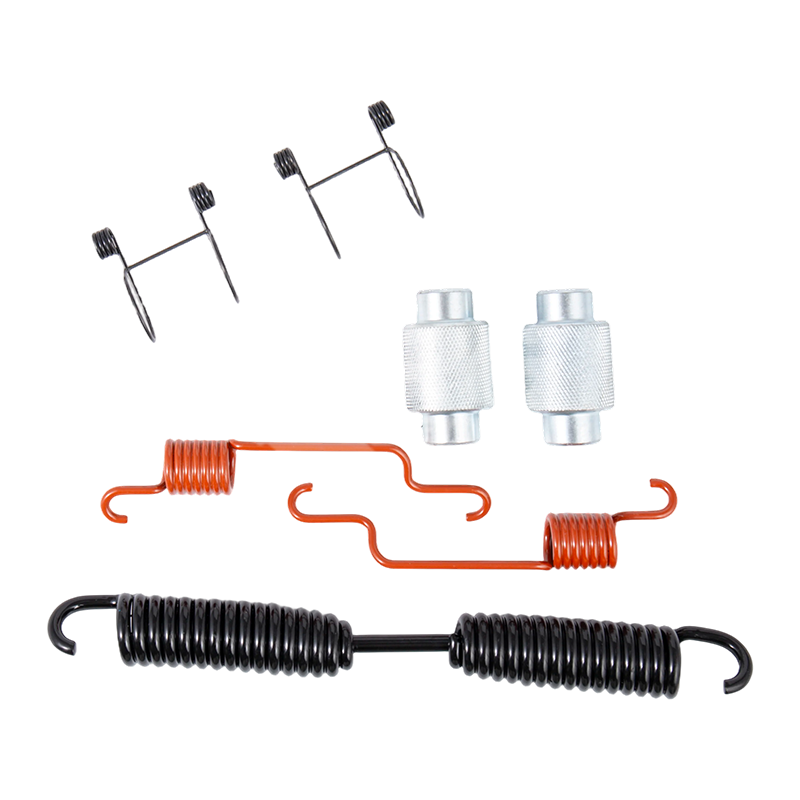
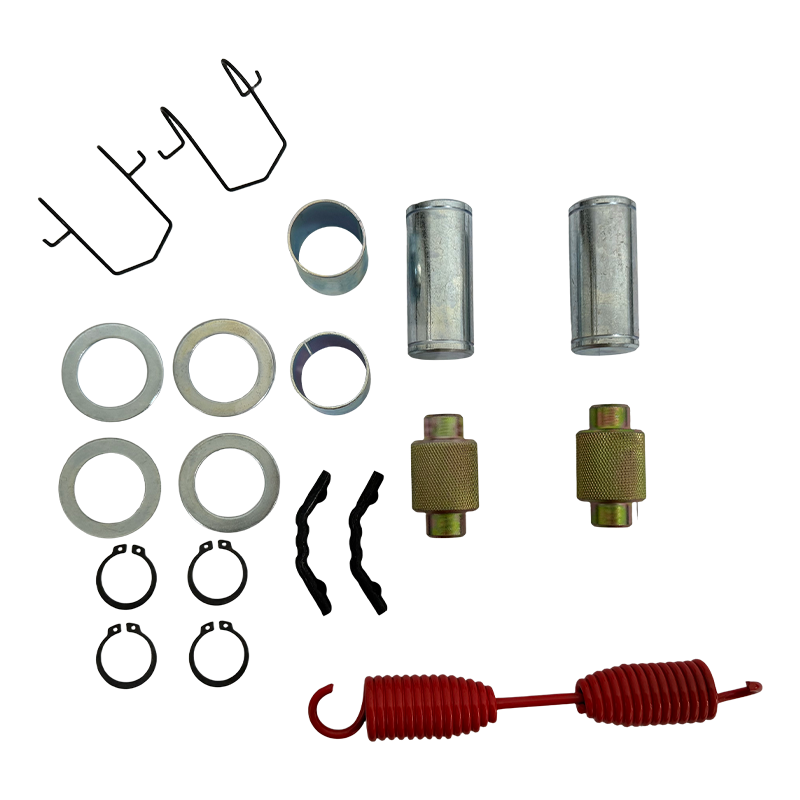
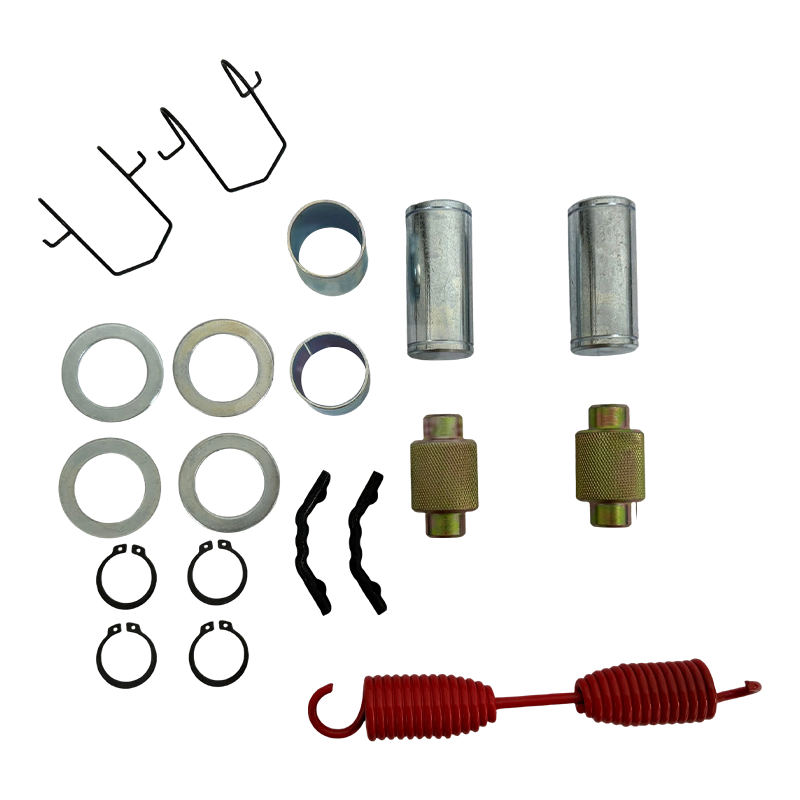
The service life of brake shoe hardware depends significantly on the base material specification and subsequent thermal processing. Standard-grade carbon steel and alloy compositions provide the necessary tensile strength and fatigue resistance required under cyclical braking loads. At CRG Brake, we specify these materials precisely because inconsistent grades lead to premature spring fatigue and anchor pin deformation.
Heat treatment processes—particularly quenching and tempering—alter the microstructure to achieve hardness values between 38–45 HRC without inducing brittleness. Properly treated hardware demonstrates resistance to stress relaxation that is approximately 40% superior to untreated equivalents, which directly correlates with the extended service life our Courage brake shoe hardware kits deliver.
| Property | Heat-Treated Hardware | Untreated Hardware |
|---|---|---|
| Hardness (HRC) | 38–45 | 20–25 |
| Tensile Strength (MPa) | ≥ 900 | ≤ 600 |
| Fatigue Life (cycles) | > 200,000 | < 120,000 |
Assembly Compatibility and Customization for Diverse Vehicle Configurations
Brake shoe hardware kits must maintain dimensional tolerances within ±0.1 mm to ensure seamless integration with brake shoe assemblies. Even minor deviations in pin diameter or spring coil pitch can cause uneven lining wear and reduced braking efficiency. This is why compatibility verification extends beyond simple part matching to include dynamic behavior under thermal expansion.
With over 20 years of deep expertise in the brake shoe industry, our core team at Zhejiang Courage Auto Parts Co., Ltd. has learned that global vehicle fleets operate across vastly different duty cycles. We offer customized OEM solutions that adjust hardware geometry and material specification to match regional road conditions—from high-temperature desert terrain to cold-climate mountainous routes.
Critical Compatibility Factors
- Anchor pin diameter and chamfer angle relative to the shoe web hole
- Return spring tension calibrated to drum diameter and lining mass
- Retainer clip geometry compatible with automated assembly lines
- Corrosion protection coating thickness suitable for local humidity and salt exposure
Performance Validation and Service Life Metrics Under Heavy-Duty Cycles
Heavy-duty commercial vehicles impose braking energy loads that are 3 to 5 times higher than passenger car applications. Hardware Kits for these vehicles must therefore pass validation protocols that simulate repeated emergency stops at gross vehicle weight. Our testing sequences include thermal cycling between 100°C and 400°C to replicate downhill braking events.
At CRG Brake, we track service life not merely by mileage but by the number of effective braking events. Data from fleet testing indicates that our hardware kits maintain clamping force consistency beyond 300,000 brake applications, a figure that exceeds typical industry benchmarks by a substantial margin. This reliability stems from our continuous innovation in manufacturing processes and relentless pursuit of product quality.
Validation Test Parameters
| Test Phase | Load Condition | Pass Criteria |
|---|---|---|
| Static Torque | 1.5× rated brake torque | No plastic deformation |
| Thermal Fatigue | 500 cycles, 350°C peak | Crack length < 2 mm |
| Salt Spray | 480 hours, 5% NaCl | Red rust area < 5% |
Field Inspection Criteria and Replacement Protocols for Brake Shoe Hardware
Technicians often focus on lining thickness while neglecting the hardware that positions and tensions the shoe. Failed return springs or elongated anchor pin holes are leading secondary causes of premature lining wear and brake drag. A disciplined inspection protocol should treat hardware as a wear item rather than a permanent fixture.
We recommend evaluating brake shoe hardware kits at every lining change, regardless of apparent condition. At CRG Brake, we supply high-performance original components and aftermarket products matching original factory standards precisely because worn hardware compromises the performance of new linings from the first stop.
Replacement Indicators
- Return springs exhibit permanent set exceeding 10% of free length
- Anchor pins display scoring, galling, or diameter reduction > 0.05 mm
- Retainer clips lose spring tension and allow lateral shoe movement
- Abnormal heat discoloration (blueing) appears on any hardware surface
Replacing hardware kits simultaneously with brake linings restores the original clamping geometry and spring rate, ensuring that the new friction material beds correctly and achieves its designed stopping performance.


 OUR Product
