

 English
  中文简体
中文简体 

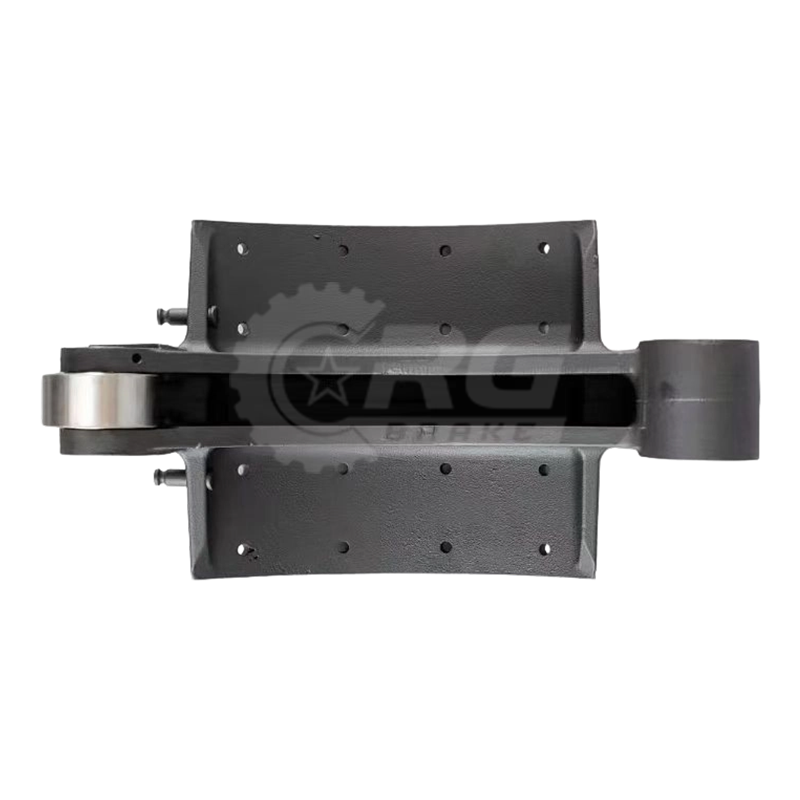

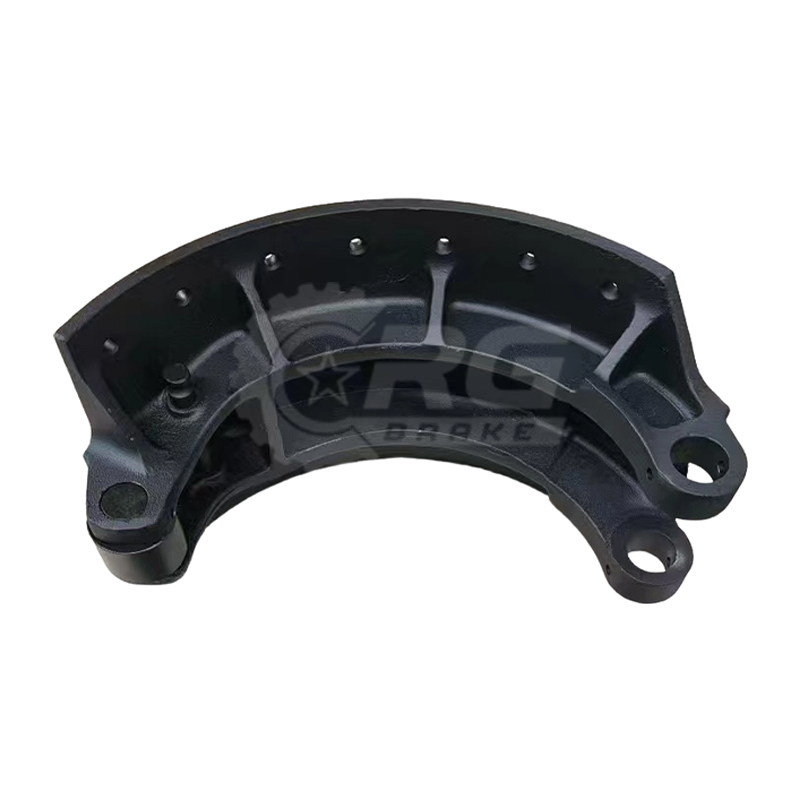
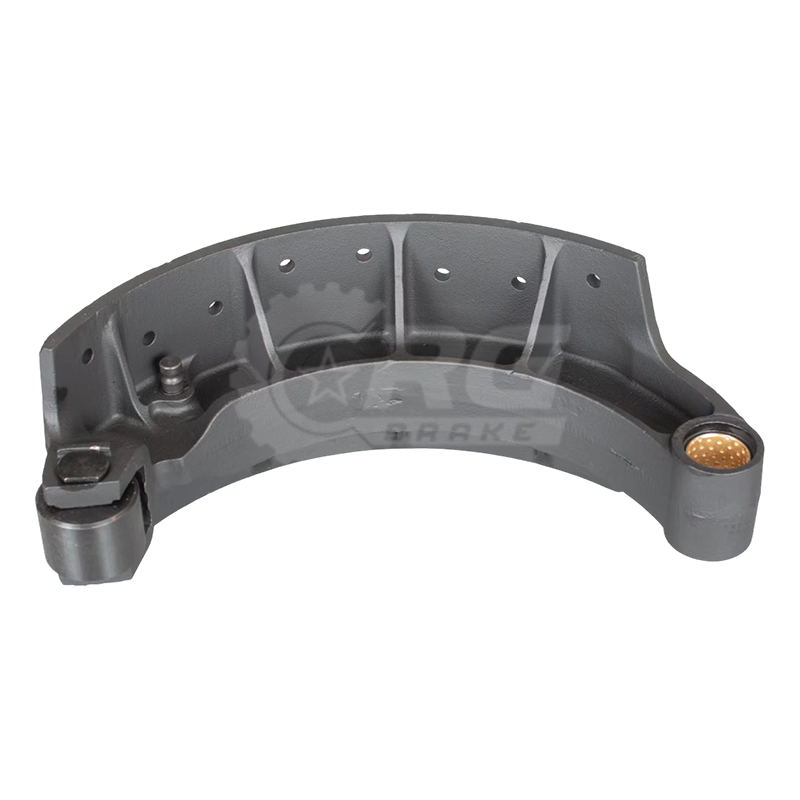
Industry Knowledge
How Iron Composition Affects the Performance of Cast Brake Shoes
The mechanical properties of a cast brake shoe are fundamentally shaped by the metallurgical makeup of the gray iron used in casting. Carbon content — typically ranging from 3.0% to 3.6% — determines how graphite flakes form within the matrix. A higher graphite flake density improves thermal conductivity and dampens vibration, which directly translates to quieter braking and more consistent pedal feel under sustained load. However, excessively coarse graphite structures reduce tensile strength, increasing the risk of crack propagation under repeated thermal cycling.
Silicon content (usually 1.8%–2.5%) controls the graphitization process during solidification. Higher silicon levels promote a ferritic matrix with softer characteristics, which is easier to machine but wears faster under heavy braking. A balanced pearlitic-ferritic matrix — achieved through precise silicon and manganese ratios — offers the best combination of hardness, wear resistance, and machinability for heavy-duty applications.
At CRG Brake, each production batch is subject to spectrometric analysis to verify that alloy ratios remain within defined tolerances. Minor deviations — even fractions of a percentage point — can shift the resulting microstructure from the target pearlite percentage, affecting both surface hardness and fatigue life under real-world braking conditions.
Reading Wear Patterns on Cast Brake Shoes to Diagnose System Problems
Worn cast brake shoes rarely tell a simple story of age — their wear geometry reveals a great deal about the condition of the surrounding brake system. Understanding these patterns allows fleet maintenance teams to address root causes rather than just replacing components on a fixed interval.
Common Wear Patterns and Their Causes
| Wear Pattern | Appearance | Likely Root Cause |
|---|---|---|
| Tapered wear (one end thin) | Lining thicker at one end | Misaligned anchor pin or eccentric cam |
| Edge wear (outer edges worn) | Drum crown contact only | Drum out-of-round or excessive drum taper |
| Center wear (middle worn) | High spot in lining center | Weak shoe web or platform deflection under load |
| Glazing with minimal wear | Shiny, polished lining surface | Contamination (oil, grease) or low-speed drag braking habit |
| Cracking at heel/toe | Radial cracks near ends | Thermal shock from repeated high-load stops with no cool-down |
When tapered wear appears consistently across the same axle position on multiple vehicles in a fleet, the likely culprit is a systematic issue with the slack adjuster setup or a batch of drums with dimensional deviation — not a shoe quality problem. Documenting wear geometry at each service interval builds a valuable database that makes future diagnoses far faster and more accurate.
Thermal Fatigue in Cast Brake Shoes: Mechanisms and Mitigation
Gray cast iron absorbs and dissipates heat well, but it is inherently brittle under tensile stress. During a heavy stop, the outer surface of a cast brake shoe can reach temperatures above 400°C within seconds, while the inner shoe body remains relatively cool. This steep thermal gradient generates compressive stress at the surface and tensile stress just beneath it. Over many thermal cycles, micro-cracks initiate at stress concentration points — typically near rivet holes, web transitions, or casting defects — and propagate inward with each subsequent heating and cooling cycle.
Several design and material factors directly influence how long a shoe can resist thermal fatigue:
- A thicker platform section distributes thermal load more evenly, reducing peak surface temperature for a given braking energy input.
- Controlled cooling rates during casting reduce residual stress locked into the microstructure before the shoe ever enters service.
- Shot-peening the shoe surface introduces compressive residual stress that counteracts the tensile stresses generated during braking, significantly extending fatigue life.
- Matching the lining friction material to the expected thermal range prevents situations where the lining retains heat against the shoe surface rather than dissipating it into the airstream.
From an operational standpoint, drivers can reduce thermal fatigue accumulation significantly by using engine braking on long descents rather than relying entirely on the service brakes, and by allowing adequate cool-down time before parking after heavy braking events. A shoe that is repeatedly brought to its thermal limit without recovery will fail far earlier than its mechanical wear rate would suggest — even if it still has lining material remaining. Zhejiang Courage Auto Parts Co., Ltd. reinforces this through technical documentation provided with each product, helping fleet operators understand the connection between driving behavior and component longevity.
Cross-Compatibility Considerations When Sourcing Cast Brake Shoes
Platform dimensions printed on a reference catalogue are a starting point, not a complete compatibility guarantee. Several dimensional and design variables determine whether a cast brake shoe will function correctly in a given application, and overlooking any of them can result in reduced braking performance, accelerated drum wear, or brake pull.
Key Dimensional and Design Parameters to Verify
- Shoe width and arc radius: The arc radius must match the drum's inner diameter to achieve full-face contact. A shoe with an arc radius smaller than the drum will contact at the center only; one with a larger arc contacts at the edges. Either condition generates uneven wear and reduced braking efficiency.
- Web height and anchor pin hole position: Even when platform dimensions match, a difference in web height or anchor pin center distance will change the effective leverage of the shoe against the cam, altering application force and balance between leading and trailing shoes on the same axle.
- Cam roller pocket geometry: S-cam and Q-cam systems have fundamentally different roller pocket profiles. Mixing components — even between supposedly compatible listings — can cause the roller to bind or lose contact at high cam angles, drastically reducing maximum braking torque.
- Return spring hole placement: Incorrect spring hole positioning changes the retraction behavior of the shoe. Insufficient retraction causes drag, heat buildup, and premature lining wear; excessive retraction reduces the responsiveness of brake engagement.
- Platform surface finish: Lining bonding or riveting requires a surface roughness within a defined range. A platform that is too smooth reduces adhesive grip; one that is too rough creates stress concentrations under the lining that can lead to delamination.
When sourcing replacement cast brake shoes for mixed fleets or less common vehicle configurations, requesting a dimensional data sheet from the supplier and cross-checking it against the OEM drawing or a physical measurement of the removed shoe is the most reliable approach. Where OEM drawings are unavailable, a coordinate measuring machine (CMM) inspection of the original part provides a reliable baseline. This level of verification is particularly important for trailer axles, where brake specifications are less standardized across manufacturers than they are for truck drive axles. For customized sourcing needs, CRG Brake offers OEM-matched dimensional data sheets upon request to support accurate fitment verification.


 OUR Product
