

 English
  中文简体
中文简体 


Industry Knowledge
FMVSS-121 Test Protocols and Fleet Safety Margins
FMVSS-121 establishes minimum performance requirements for air-braked heavy commercial vehicles, focusing on stopping distance, fade resistance, and recovery characteristics. The standard mandates that brake systems maintain effectiveness across a defined temperature spectrum, typically from ambient conditions through repeated high-energy stops exceeding 300°C at the lining interface.
Link Laboratory certification involves sequential dynamometer tests simulating loaded descent scenarios, emergency stops, and thermal recovery cycles. Passing these sequences requires friction materials to retain at least 50% of baseline effectiveness after thermal stress, a threshold that separates commercial-grade formulations from passenger-car adaptations.
| Test Phase | Condition | Performance Threshold |
|---|---|---|
| Cold Effectiveness | Ambient temperature, initial stops | Stopping distance ≤ baseline specification |
| Hot Effectiveness | Post-fade thermal load | ≤ 125% of cold stop distance |
| Recovery | Cool-down period post-fade | Return to within 110% of cold baseline |
| Wear Assessment | Full test cycle completion | Thickness loss within manufacturer limits |
Procurement teams should verify that supplier certifications specify dynamometer conditioning procedures and drum surface preparation standards, as these variables significantly influence repeatability. At CRG Brake, we submit every formulation of our American Brake Linings to Link Laboratory under identical mounting pressures and surface finishes to ensure that fleet customers receive traceable, batch-consistent safety margins.
FMSI Standardization and Cross-Reference Procurement
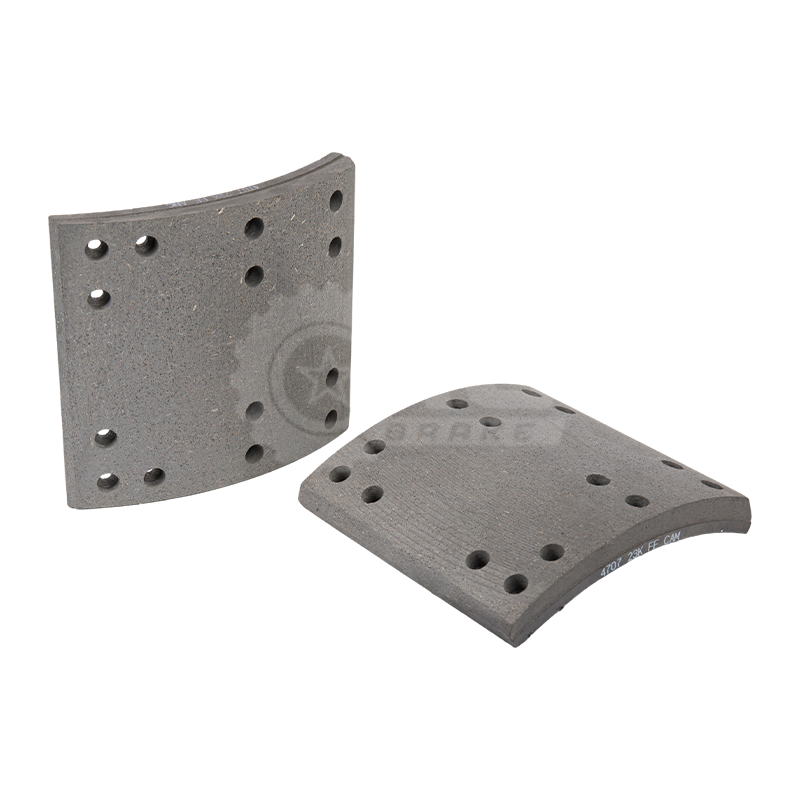
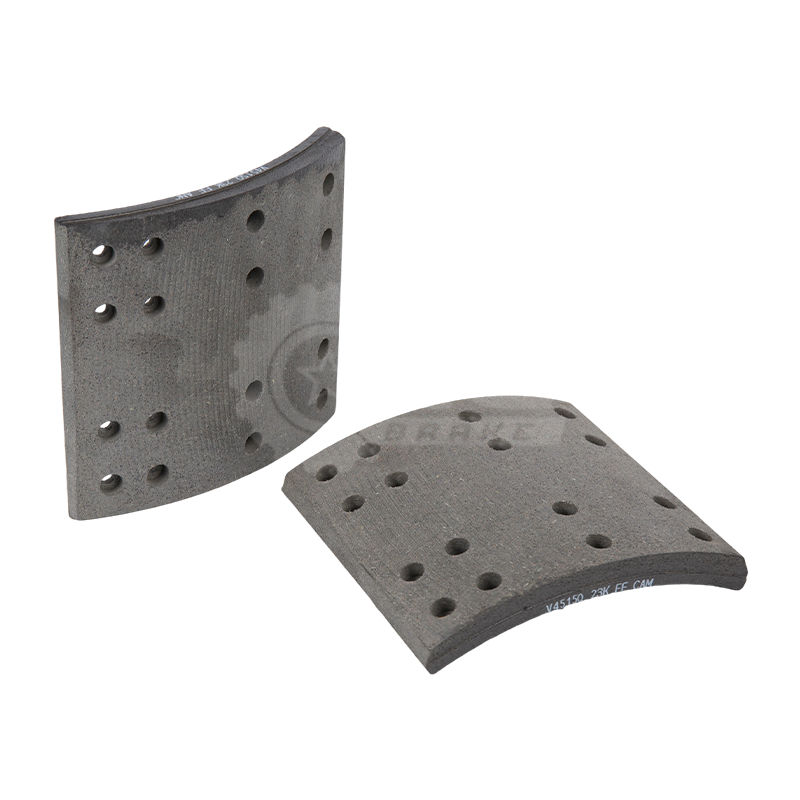
The Friction Materials Standards Institute (FMSI) numbering system provides a universal reference framework that eliminates ambiguity when sourcing replacement drum brake linings across mixed fleets. Each FMSI designation correlates to specific drum diameter, shoe width, lining thickness, and rivet hole patterns, allowing maintenance managers to match components without relying solely on OEM part numbers that may vary by vehicle assembly year.
Practical Cross-Reference Workflow
- Identify the existing shoe assembly FMSI code stamped on the web or edge of the brake shoe.
- Consult the supplier interchange catalog to confirm lining geometry compatibility, not merely the FMSI prefix match.
- Validate that the replacement lining material grade matches the application severity—highway haulage, urban delivery, or off-road construction impose distinct wear and thermal profiles.
- Request batch test reports showing dynamometer performance against FMVSS-121 baselines for the specific FMSI variant.
Misalignment in even one rivet hole position or a 2mm thickness deviation can create uneven pressure distribution, leading to premature drum scoring and inconsistent stopping performance. We have observed at Zhejiang Courage Auto Parts that fleets running multi-brand trailers benefit most from suppliers maintaining full FMSI coverage, as it consolidates inventory and reduces emergency procurement lead times.
Friction Stability and Braking Linearity Under Variable Thermal Loads
Friction coefficient in heavy-duty drum brakes is not a static property; it fluctuates with interface temperature, humidity, and contact pressure. Braking linearity describes the predictability of deceleration relative to pedal effort—a critical factor for driver confidence and load security during partial braking events such as downhill speed control or urban traffic modulation.
Factors That Degrade Linearity
- Thermal fade from crystalline phase changes in the friction matrix, typically initiating above 250°C sustained interface temperature.
- Moisture absorption in organic binders during prolonged storage, causing initial grab and erratic torque output.
- Uneven wear across the lining arc, often resulting from drum out-of-roundness or improper shoe centering during installation.
Formulations engineered for commercial drum applications increasingly employ hybrid resin systems and controlled porosity to stabilize the friction curve. The objective is a friction variation of less than ±15% across the 100°C to 350°C operating window, which correlates directly with measurable improvements in driver fatigue and cargo damage rates. Our development process at CRG Brake targets this stability band specifically, because unpredictable braking behavior poses greater liability risk than absolute stopping distance alone.
Environmental Compliance and Noise Mitigation in Friction Material Selection
Regulatory pressure on brake-generated particulate matter is intensifying in multiple jurisdictions, with proposed standards targeting copper and heavy-metal content in friction formulations. Concurrently, fleet operators in residential delivery and overnight haulage report that brake noise complaints now rank among the top driver satisfaction issues, directly influencing retention rates in competitive labor markets.
Material Selection Criteria for Modern Fleets
| Attribute | Traditional Semi-Metallic | Advanced Non-Asbestos Organic | Ceramic-Enhanced Hybrid |
|---|---|---|---|
| Particulate Emissions | Higher metal content | Reduced copper, compliant with pending regulations | Minimal heavy metals, high thermal stability |
| Noise Generation (dB) | Moderate to high | Low frequency dampening | Consistently low across temperature range |
| Thermal Ceiling | 350°C | 280°C | 400°C+ |
| Wear Rate (Relative) | Moderate | Higher at elevated temperatures | Balanced, drum-friendly |
Selecting a formulation that satisfies both environmental thresholds and noise targets without sacrificing FMVSS-121 performance requires supplier-level formulation transparency, not merely finished-goods testing. Buyers should request material safety data sheets and copper-content declarations alongside dynamometer reports. We approach this at CRG Brake by validating each raw-material batch for heavy-metal compliance before it enters the mixing line, ensuring that the environmental and acoustic advantages claimed in our specifications translate to consistent fleet-level outcomes.


 OUR Product
