

 English
  中文简体
中文简体 

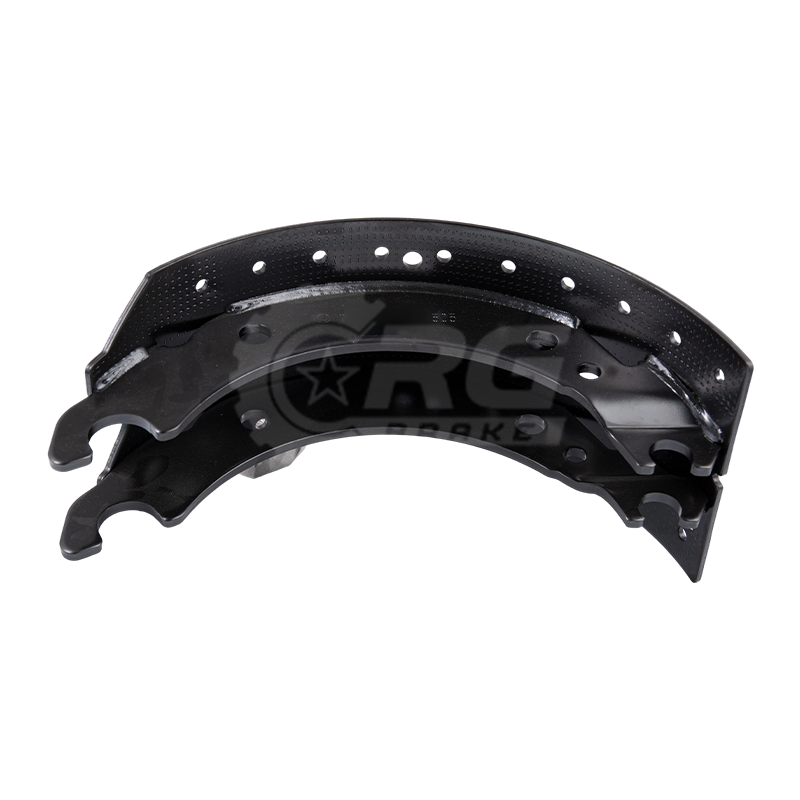

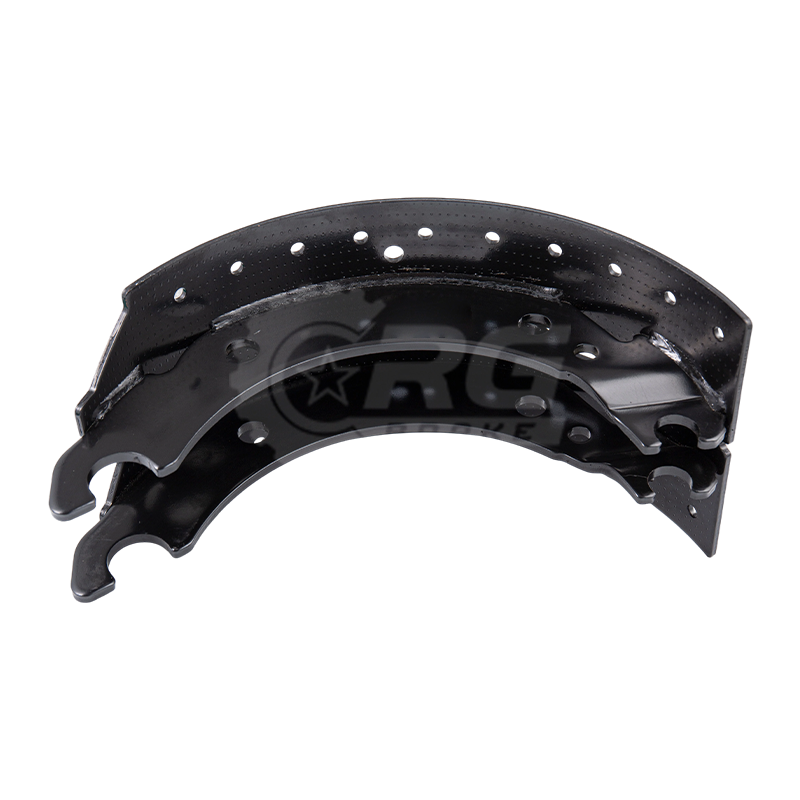
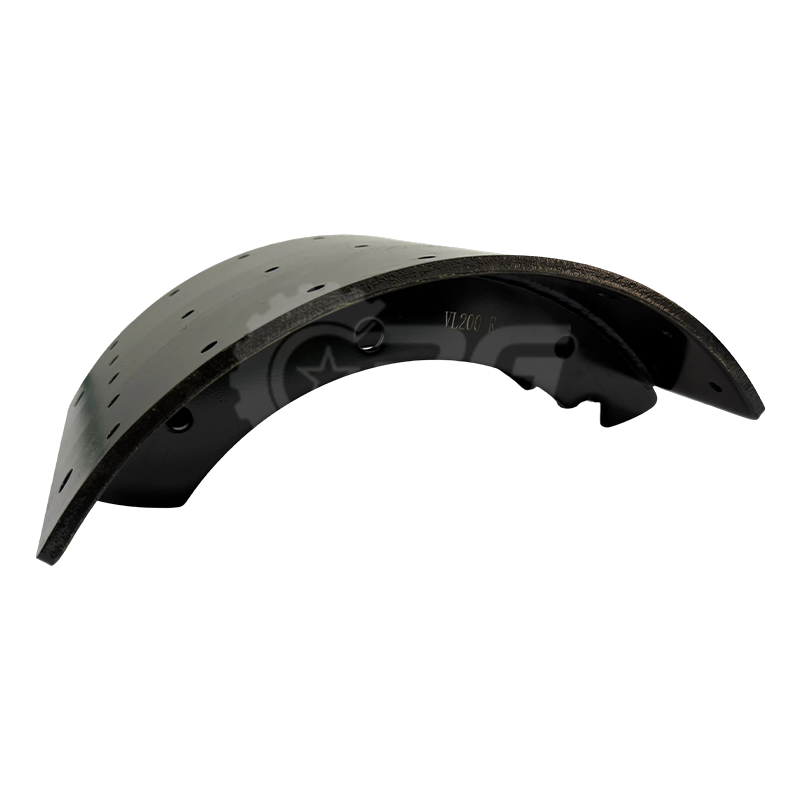
Industry Knowledge
Wedge Thread Geometry and Vibration Resistance in European Brake Shoes
The locking mechanism of European Brake Shoes relies on a distinct 30° wedge cant design within the locking nut. When the bolt is fully tightened, the top thread engages tightly with this wedge surface. Unlike conventional fasteners where the resultant normal force acts at a 30° angle to the bolt axis, the wedge geometry redirects this force to act at a 60° angle to the bolt axis. This angular shift is not merely theoretical—it directly increases the effective normal force during fastening beyond what standard screws generate, which is precisely why the assembly delivers superior vibration-proof locking capability under dynamic loads.
In our testing at CRG Brake, we have observed that this 60° force vector creates a more effective friction lock between mating threads, reducing the probability of self-loosening caused by harmonic vibration from rotating brake drums and axle motion. For fleet operators, this translates to fewer unexpected maintenance stops and more predictable service intervals.
Thread Load Distribution and Shear Resistance in European Brake Shoes
A critical but often overlooked feature of European Brake Shoes is the 30° inclined plane machined at the screw thread bottom. This geometry serves a functional purpose beyond simple fastening: it channels the nut's locking force evenly across every engaged tooth of the thread rather than concentrating stress on the first few engaged threads. Because the compressive force on each thread surface is uniformly distributed, the assembly mitigates localized stress peaks that typically initiate thread wear and shear deformation.
Why Even Distribution Matters in Heavy Vehicle Applications
Heavy commercial vehicles impose cyclical torque and thermal expansion loads on brake hardware. When locking force concentrates on a subset of threads, fatigue cracks and galling develop prematurely. The even distribution characteristic of this thread design effectively solves the problem of thread wear and shear deformation by ensuring that no single thread tooth carries a disproportionate share of the mechanical load. At Zhejiang Courage Auto Parts Co., Ltd., we specify this geometry in our OEM production because it directly correlates with longer service life in high-mileage operations.
Reusability Benchmarks and Repeated Assembly Testing for European Brake Shoes
Serviceability is a decisive economic factor in commercial vehicle maintenance. European Brake Shoes utilizing anti-loose screw technology have undergone extensive cyclic testing: assemblies are subjected to more than 50 repeated tightening and disassembly cycles under controlled torque specifications. Test data consistently shows that the locking force remains undiminished after these cycles, preserving the original locking effect.
Maintenance Scenarios Benefiting from High Reusability
- Routine brake lining replacement without discarding intact fasteners
- Axle and hub inspection procedures requiring temporary shoe removal
- Emergency roadside repairs where spare hardware availability is limited
This level of reusability offers tangible cost advantages. Technicians can remove and reinstall brake shoes during hub inspections, suspension work, or bearing services without replacing fasteners. The ability to maintain consistent clamping force across multiple service events reduces hardware consumption and inventory costs. We at CRG Brake view this not as a secondary benefit but as a core performance metric that defines whether a brake shoe assembly is truly suited for long-haul heavy-duty cycles.
Practical Selection Criteria for European Brake Shoes in Mixed-Duty Fleets
Specifying the correct European Brake Shoes for a mixed fleet requires matching thread design advantages to actual operational stressors rather than relying on generic ratings. The following comparison illustrates how wedge-thread specifications translate into measurable field performance differences:
| Performance Metric | Standard Thread Design | 30° Wedge Thread Design |
|---|---|---|
| Normal Force Angle to Bolt Axis | 30° | 60° |
| Locking Force Distribution | Concentrated on first 2-3 threads | Even across all engaged threads |
| Vibration Resistance Rating | Standard | Enhanced |
| Verified Reusability Cycles | Typically <20 | More than 50 |
| Primary Failure Mode | Thread wear and shear deformation | Minimal deformation observed |
When evaluating suppliers, request documented test data for these specific parameters rather than general compliance certificates. A supplier capable of providing cycle-test reports and thread-load distribution analysis is more likely to deliver hardware that performs consistently across varied road conditions—from high-frequency vibration environments on rough haul roads to thermal cycling encountered in mountainous descents. We welcome technical discussions at CRG Brake to align these specifications with your fleet's duty cycles.


 OUR Product
