

 English
  中文简体
中文简体 

4707Q
This 4707Q A19 3222 D2006 American Brake Shoes is a premium, heavy-duty replacement component specifically engineered for commercial vehicle braking s...
See Details
Content
A brake shoe kit is a comprehensive set of components designed to restore a drum brake assembly to full factory specification in a single service operation. Rather than replacing only the friction linings and leaving worn or fatigued hardware in place, a proper brake shoe kit supplies every mechanical element that contacts, positions, actuates, and adjusts the brake shoes during normal operation. This matters because drum brake hardware — springs, adjusters, pins, and retainers — undergoes significant stress and thermal cycling with every brake application. By the time brake shoes have worn to the replacement threshold, the surrounding hardware has typically weakened, stretched, or corroded to the point where reusing it compromises braking performance and shortens the life of the new shoes.
Drum brakes remain in widespread use on the rear axles of passenger cars, light trucks, vans, and commercial vehicles, as well as on all four corners of some economy and entry-level vehicles. Understanding exactly what a brake shoe kit contains — and the specific function of each part — allows technicians and vehicle owners to verify that a kit is complete before beginning work, identify any missing or incorrect components, and understand why each element must be replaced together rather than piecemeal.
The brake shoes are the primary friction components and the parts from which the entire kit takes its name. Each shoe consists of a curved steel platform — called the shoe table or web — to which a friction lining is bonded or riveted on its outer curved surface. When the wheel cylinder or brake cam expands the shoes outward, the friction lining presses against the inner drum surface to generate the braking force that slows the vehicle.
A standard drum brake uses two shoes per wheel: a primary shoe (also called the leading shoe) and a secondary shoe (also called the trailing shoe). In a leading-trailing configuration, the primary shoe self-energizes as the drum rotates into it, generating higher clamping force from the same actuating pressure; the secondary shoe is pushed against the drum rotation and generates less force. Because of this difference in loading, the primary shoe lining typically wears faster and is often slightly shorter or made from a softer friction compound than the secondary shoe lining. Quality brake shoe kits supply both shoes as a matched pair, pre-set to the correct arc radius for the drum diameter specified — an important detail, since shoes ground to the wrong radius make poor contact with the drum surface and require an extended bedding-in period.
Return springs — also called retracting springs — are among the most critical hardware items in a brake shoe kit. Their function is to pull the brake shoes firmly away from the drum surface as soon as the driver releases the brake pedal, ensuring that no residual contact occurs between the lining and drum during normal driving. If a return spring is weak, broken, or incorrectly installed, the shoe drags against the drum continuously, generating heat, accelerating lining wear, reducing fuel economy, and in severe cases causing the drum to overheat and distort.
Most drum brake assemblies use two return springs per wheel: an upper return spring that connects the tops of both shoes near the wheel cylinder, and a lower return spring that connects the bottoms of both shoes near the anchor plate or adjuster. These springs are not interchangeable — they are engineered to specific load ratings and free lengths. The upper spring is typically stronger than the lower spring because it must overcome wheel cylinder pressure as well as pull the shoes back. A complete brake shoe kit supplies both springs as new items, colour-coded in many cases to prevent mix-up during installation.
While return springs control shoe movement in the radial direction (toward and away from the drum), hold-down springs and their associated pins and retainer cups control movement in the axial direction — preventing the shoes from rattling side to side or tilting away from the backing plate during operation. Each shoe is held against the backing plate by a hold-down pin that passes through a hole in the shoe web and backing plate, with a coil spring and a retaining cap that locks the pin in a quarter-turn bayonet-style action.
Over time, hold-down springs lose their clamping force due to repeated compression cycling and heat exposure. A shoe that is inadequately held against the backing plate can move unevenly during braking, causing uneven lining contact, noise, and vibration. In a quality brake shoe kit, new hold-down springs, pins, and retainer cups are included as a matched set. The pins and cups are often made from zinc-plated or cadmium-plated steel to resist corrosion in the wet and muddy environment immediately behind the wheel.
The self-adjuster is the component that automatically compensates for friction lining wear, keeping the shoe-to-drum clearance within the narrow range needed for responsive pedal feel and correct parking brake function. As the lining wears thinner, the adjuster incrementally extends, moving the shoe web slightly farther from the backing plate anchor so the lining remains close to the drum surface without dragging.
The most common self-adjuster design uses a threaded screw mechanism with a toothed star wheel at one end. The star wheel is incrementally rotated by an adjuster lever each time the brakes are applied in reverse (or in some designs, each time the parking brake is applied), threading the adjuster screw outward and increasing the effective length of the adjuster strut between the two shoes. The screw threads are left-handed on one side of the vehicle and right-handed on the other to ensure the adjuster always lengthens rather than shortens with star wheel rotation. Brake shoe kits include the complete adjuster assembly — screw, nut, and star wheel — as a new unit, since corroded or seized adjusters are a primary cause of brake pull and uneven rear braking.
The adjuster lever is a stamped steel pawl that engages the star wheel teeth and indexes the adjuster by one tooth increment per qualifying brake application. The lever is held in contact with the star wheel by a small adjuster spring (sometimes called a strut spring or lever spring) that keeps the pawl tensioned against the wheel teeth. If this spring is missing or weak, the lever bounces off the star wheel rather than engaging it, and the self-adjusting mechanism stops functioning. The adjuster lever and its spring are always included in a complete brake shoe kit.
On vehicles where the rear drum brakes double as the parking brake, the kit typically includes parking brake-specific hardware that links the parking brake cable to the shoe assembly. This usually consists of a parking brake lever — a stamped steel arm that pivots on a pin through the secondary shoe web — and a connecting strut or link that transfers parking brake cable pull into lateral shoe expansion independent of the wheel cylinder.
The parking brake lever pin and its retaining clip are also included, since these small fasteners are frequently deformed during removal and must be replaced to ensure the lever pivots freely. A lever that is stiff on its pin prevents full parking brake application and, on self-adjusting systems that use parking brake activation to drive the adjuster, also disables the self-adjustment function.
Beyond the major components described above, a well-specified brake shoe kit typically includes several additional small parts that are easily overlooked but important for a complete and correct installation.
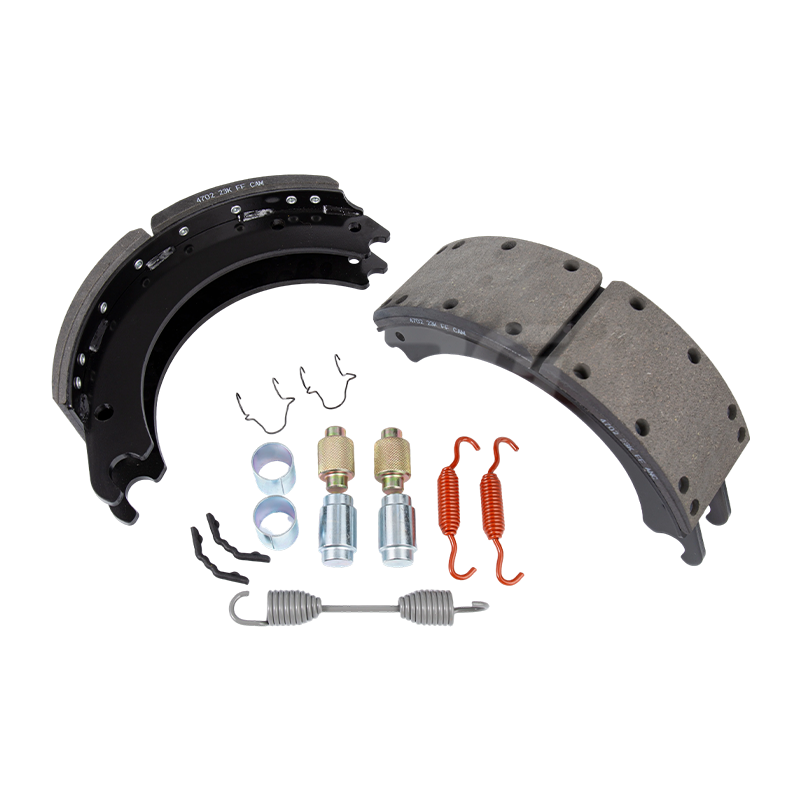
The table below summarises the components most commonly included in a complete brake shoe kit, their quantity per axle, and their primary function in the drum brake assembly.
| Component | Qty per Axle | Primary Function |
| Primary brake shoe (with lining) | 2 (one per wheel) | Leading friction contact with drum |
| Secondary brake shoe (with lining) | 2 (one per wheel) | Trailing friction contact with drum |
| Upper return spring | 2 (one per wheel) | Retracts shoes from drum after pedal release |
| Lower return spring | 2 (one per wheel) | Secondary shoe retraction and adjuster anchor |
| Hold-down spring set (spring, pin, cup) | 4 sets (two per wheel) | Retains shoe web against backing plate |
| Self-adjuster screw assembly | 2 (one per wheel, handed L/R) | Compensates for lining wear automatically |
| Adjuster lever | 2 (one per wheel) | Indexes star wheel during qualifying brake use |
| Adjuster lever spring | 2 (one per wheel) | Keeps lever engaged with star wheel teeth |
| Parking brake lever and pin | 2 (one per wheel) | Transfers cable pull to shoe expansion |
| Shoe guide plates / anti-rattle clips | Varies by application | Reduces noise and stabilises shoe position |
Before beginning any drum brake service, lay all kit components out on a clean workbench and cross-reference them against the kit's packing list or the vehicle-specific parts diagram. Pay particular attention to the following points to avoid discovering a missing part mid-job:
Sourcing a brake shoe kit from a reputable supplier that provides vehicle-specific application coverage — rather than a generic kit requiring adaptation — is the most reliable way to ensure all components are correct for the drum diameter, wheel cylinder bore size, and hardware configuration of the specific vehicle being serviced. A complete, correctly specified kit installed with proper technique will restore drum brake performance to factory standard and deliver full lining service life before the next replacement interval.
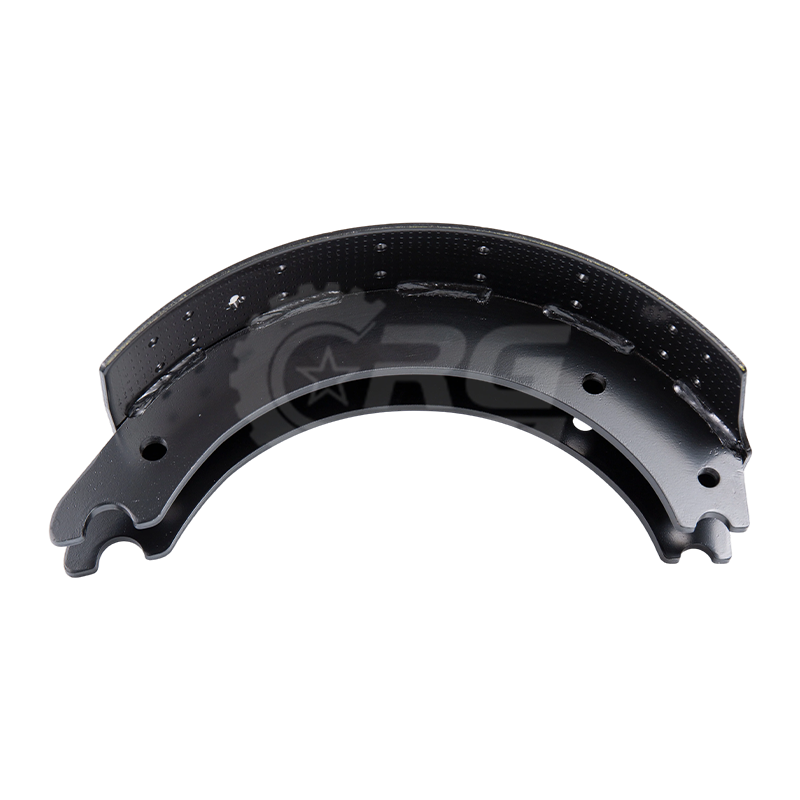
This 4707Q A19 3222 D2006 American Brake Shoes is a premium, heavy-duty replacement component specifically engineered for commercial vehicle braking s...
See Details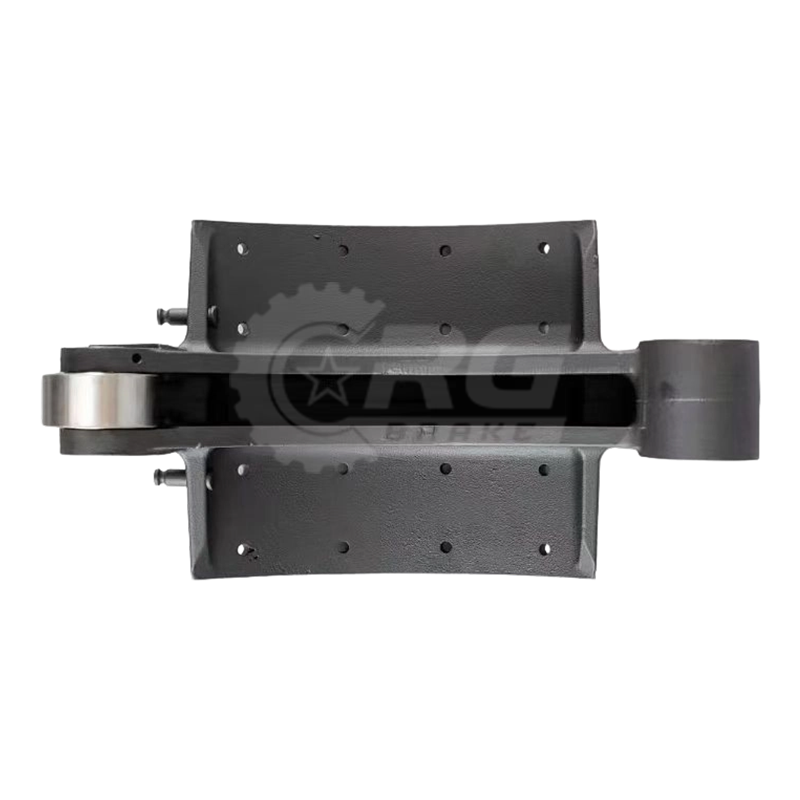
The SC254 1104545 Cast Brake Shoes is a premium-grade, high-performance braking component meticulously engineered for heavy-duty commercial vehicles. ...
See Details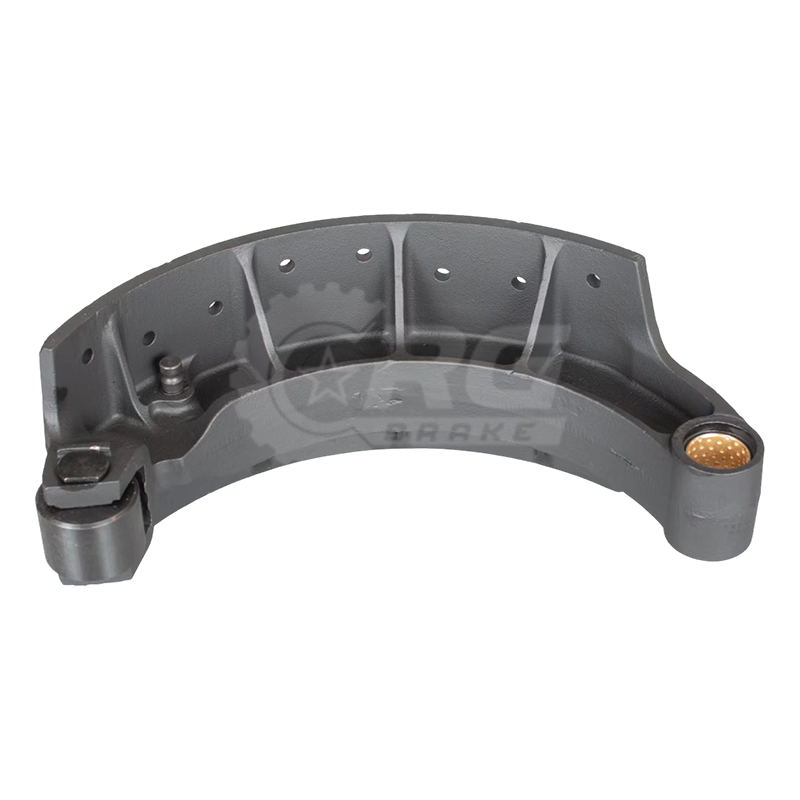
BENZ180 659 420 0619 Cast Brake Shoes, with precise dimensions of 410×180mm, is meticulously engineered to meet the rigorous demands of commercial and...
See Details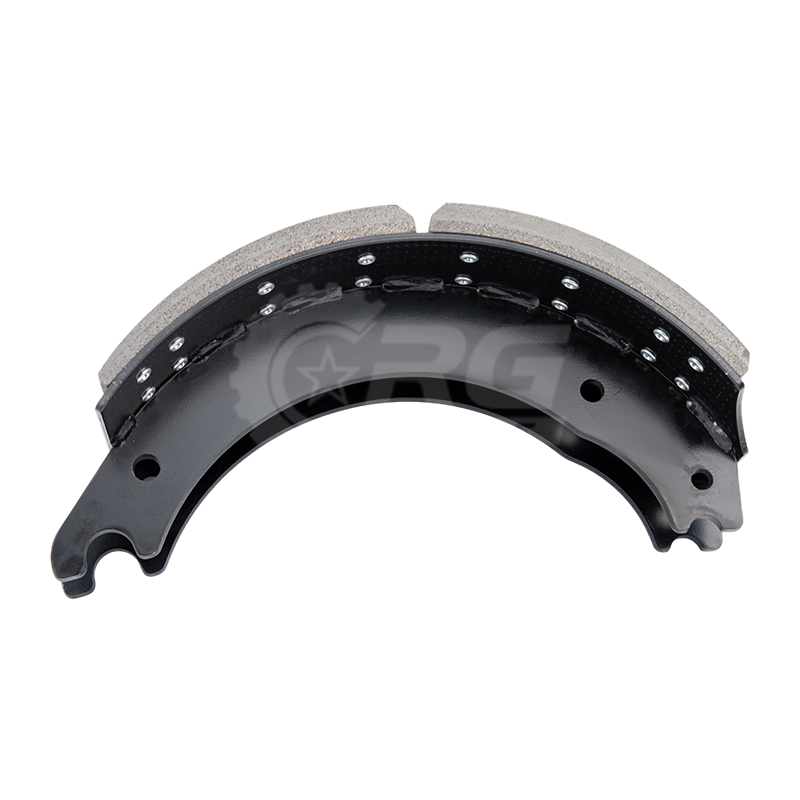
The 4515Q A91 3222 S1293 Lined Brake Shoes is a high-performance braking component meticulously engineered to meet the rigorous demands of modern brak...
See Details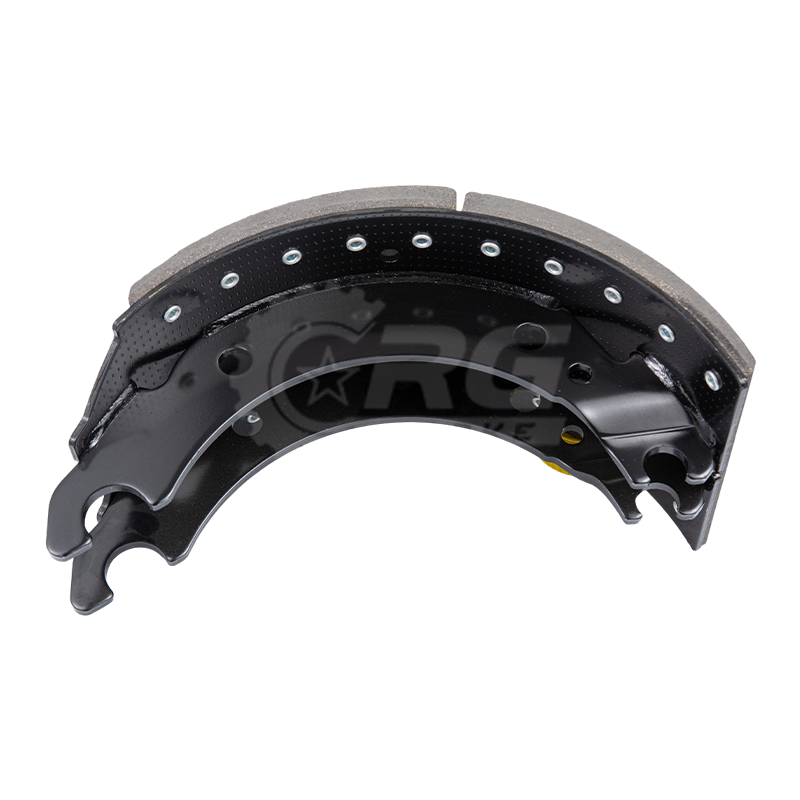
BPW200 05.091.27.83.0 Lined Brake Shoes is a premium, high-performance braking component meticulously engineered for use in commercial vehicle braking...
See Details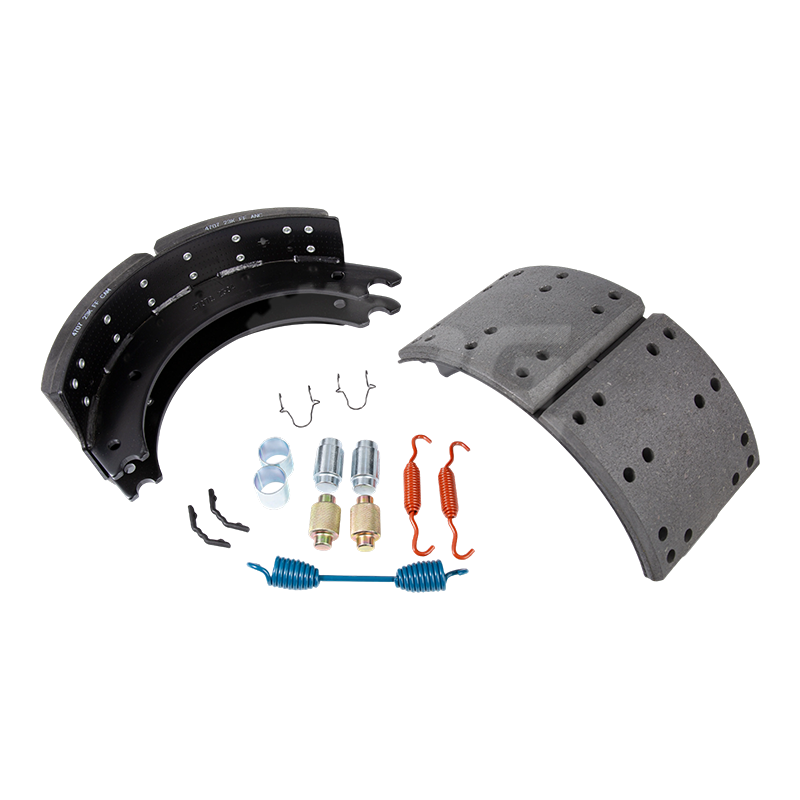
Our 4707Q A19 3222 D2006 Lined Brake Shoes With Hardware Kits are precision-engineered components measuring 16.5 inches in length and 7 inches in widt...
See Details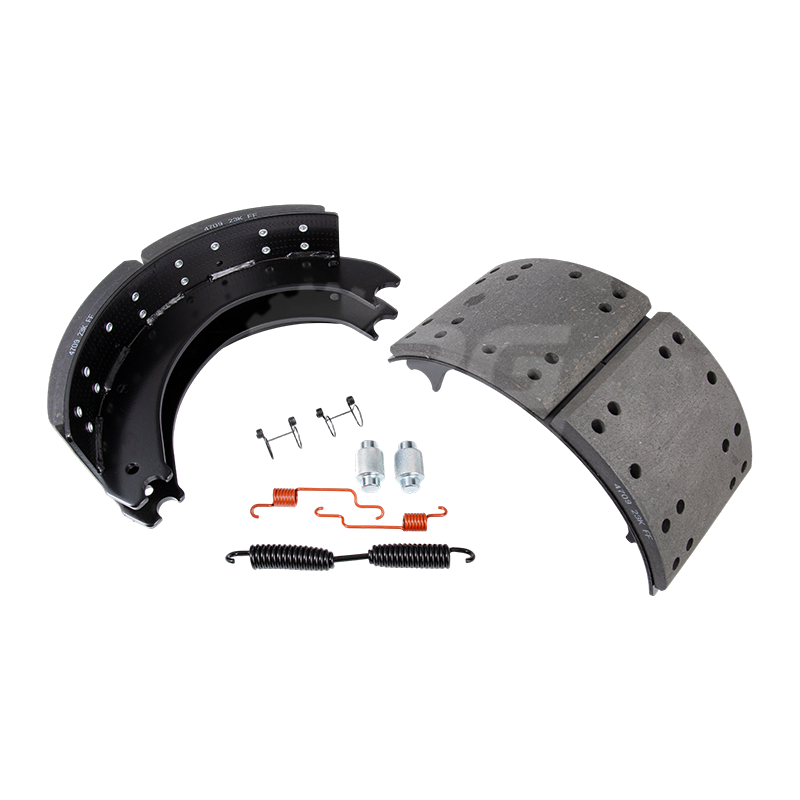
These 4709ES2 EATON 819707 Lined Brake Shoes With Hardware Kits measure 16.5 inches by 7 inches, specifically engineered to fit vehicles that require ...
See Details
The 4702Q A3222 M2223 Lined Brake Shoes With Hardware Kits with Hardware Kits, measuring 15 inches by 4 inches, are meticulously engineered to provide...
See Details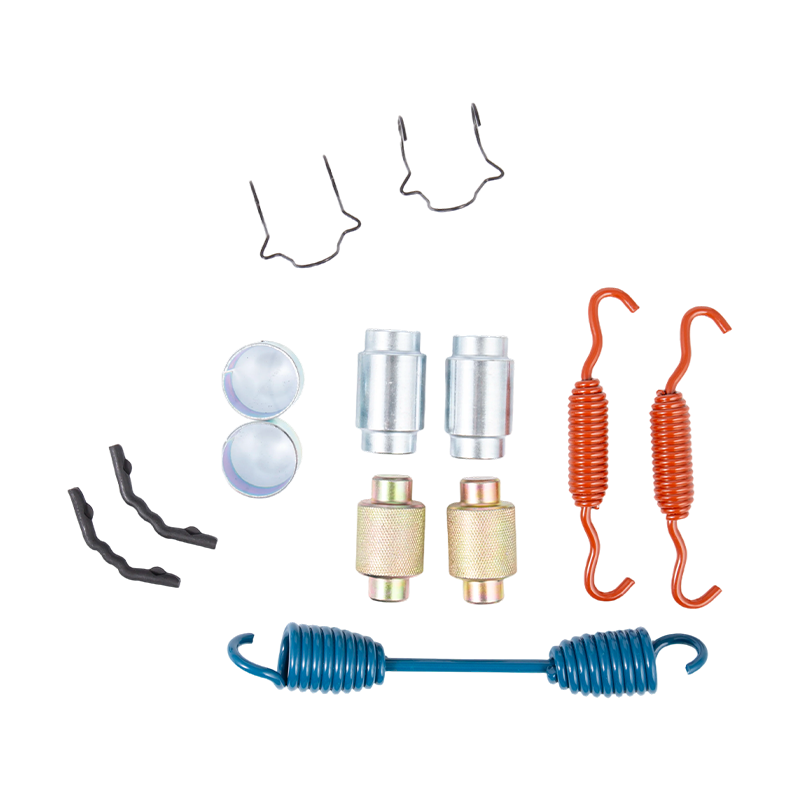
The 4515Q/4707Q E-2769SHD Hardware Kits is meticulously engineered specifically for use with the 4515Q and 4707Q vehicle models, targeting the essenti...
See Details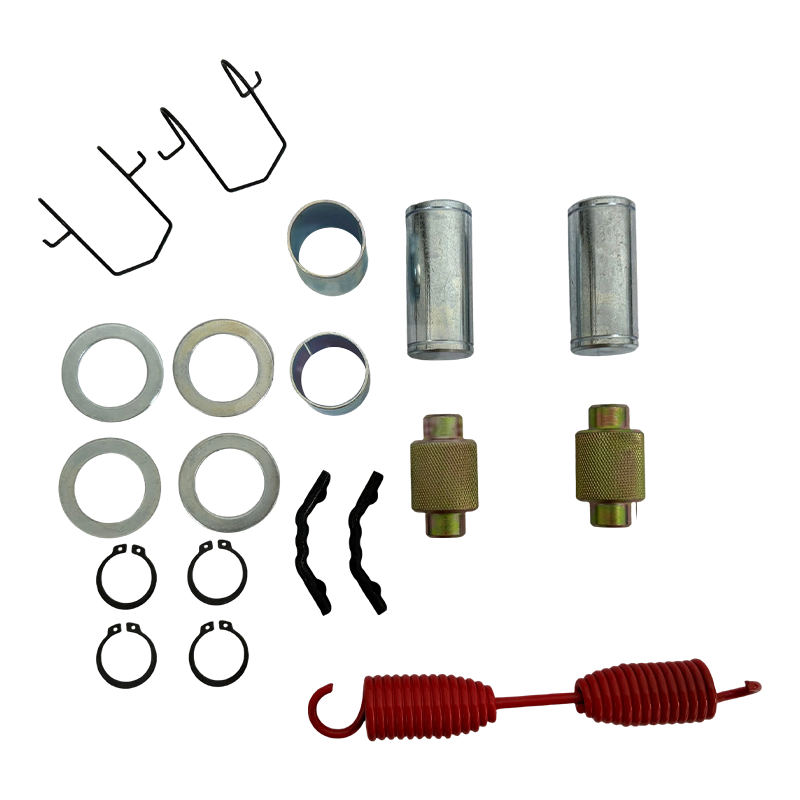
BPW NEW Brake Repair Kit represents a state-of-the-art, precision-engineered hardware solution specifically designed for the high-performance maintena...
See DetailsGet a Free (Customized) Quote

derek@crgbrake.com
vicky@crgbrake.com

 OUR Product
What’s News
Copyright © Zhejiang Courage Auto Parts Co., Ltd. All Rights
Reserved
 Commercial Vehicles CRG Brake Parts Manufacturers