

 English
  中文简体
中文简体 


Industry Knowledge
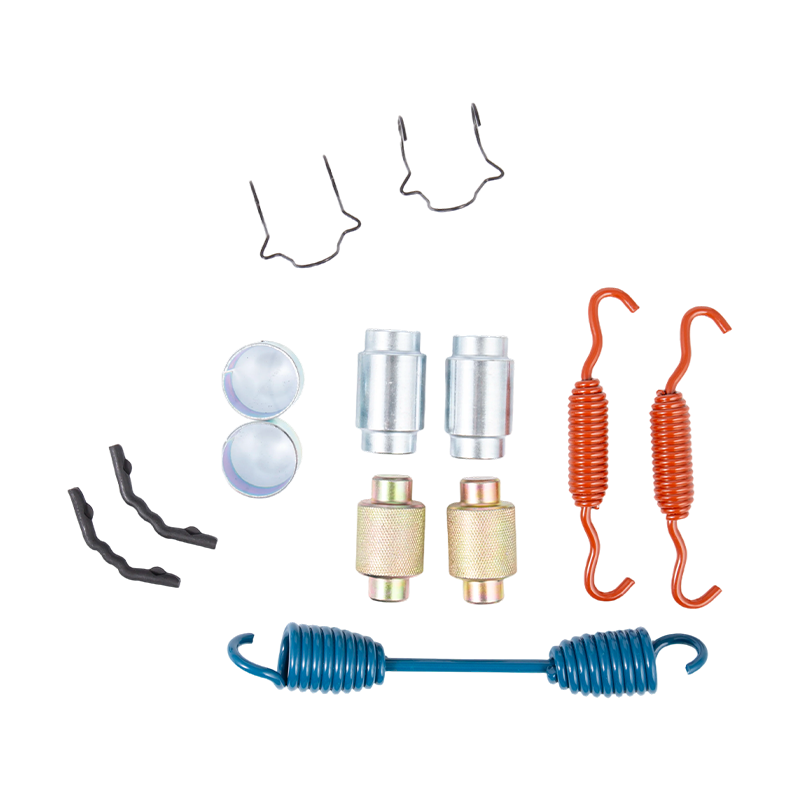
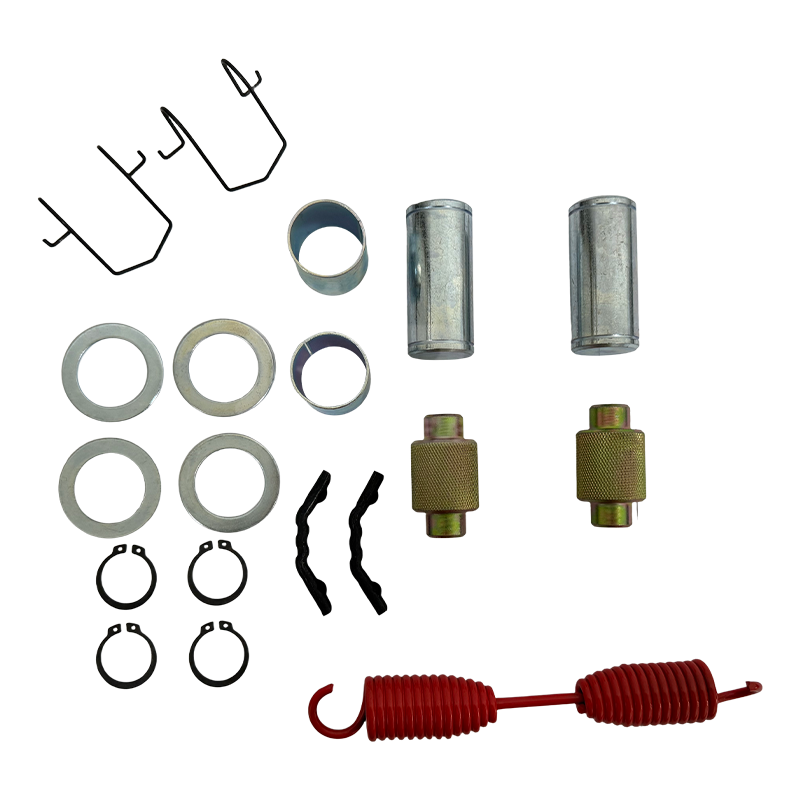
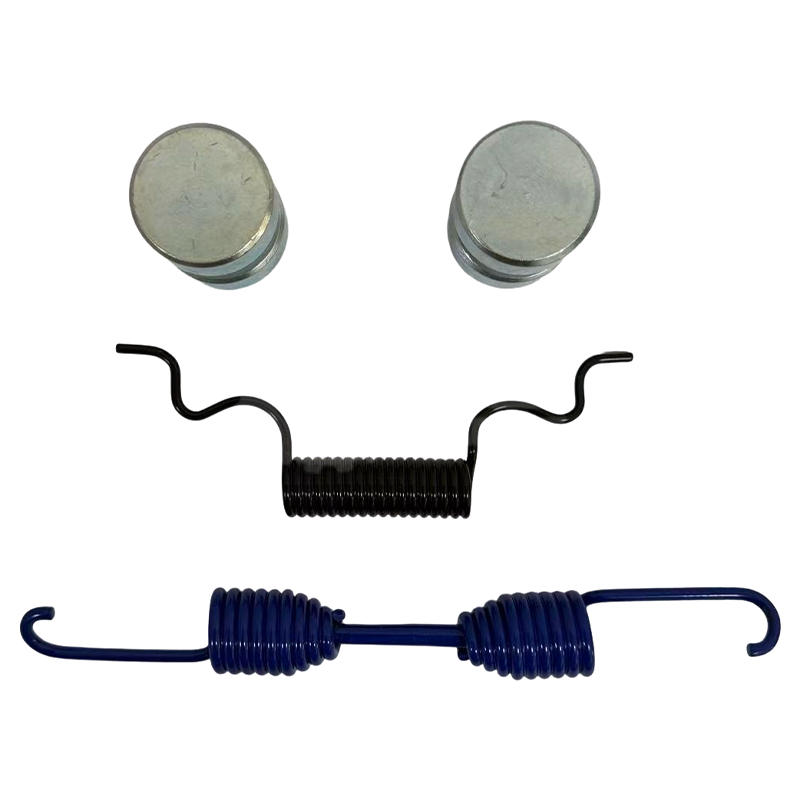
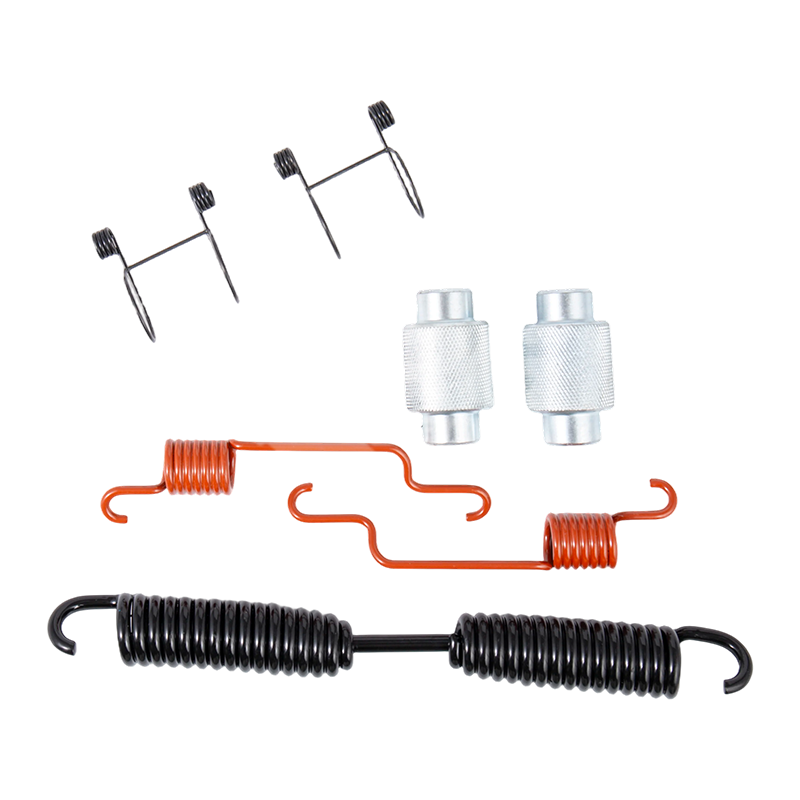
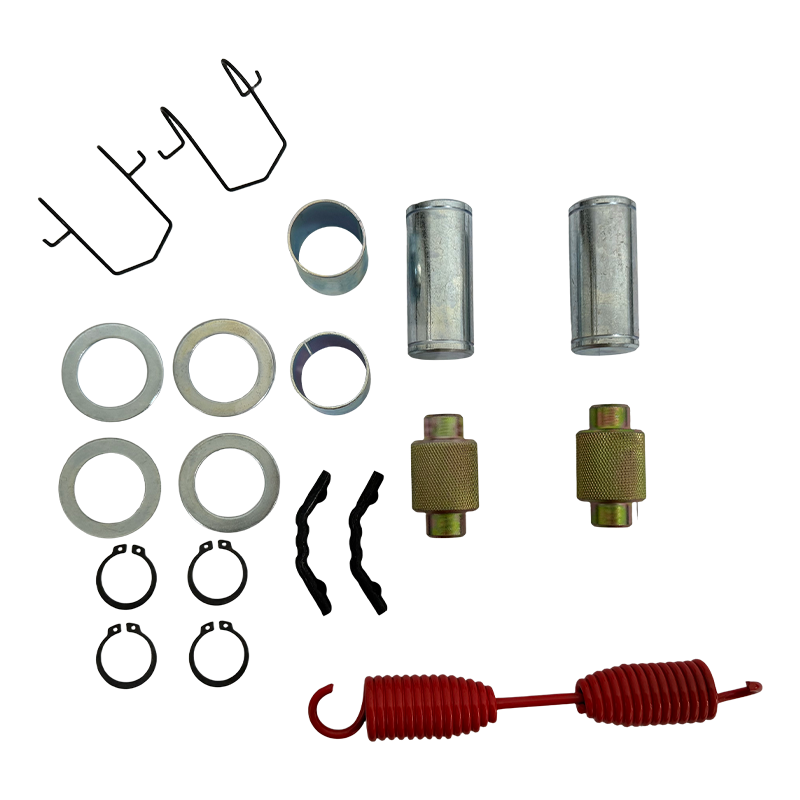
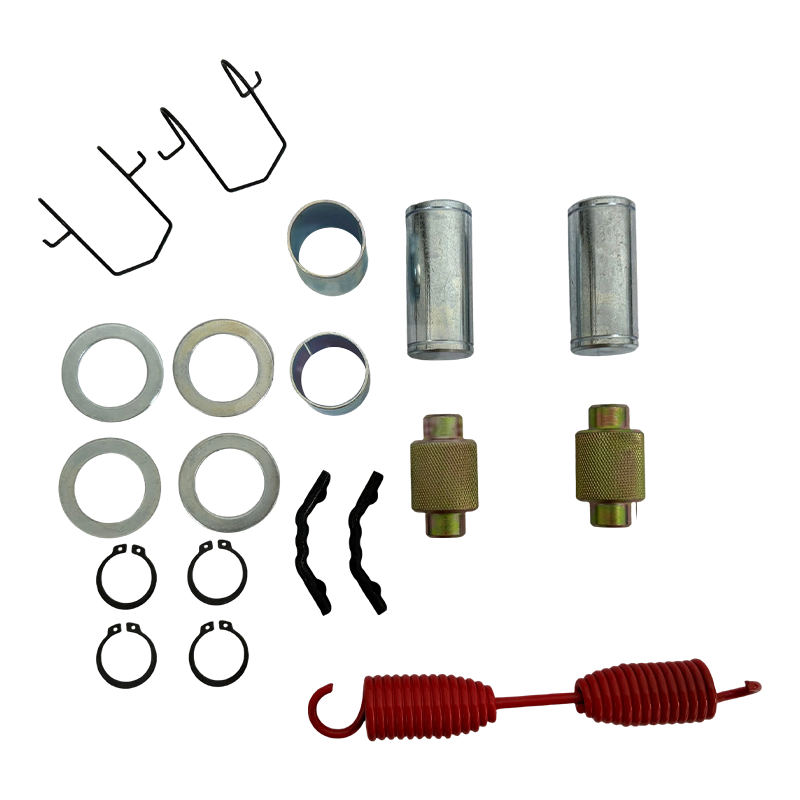
What a Brake Hardware Kit Actually Contains and Why Each Piece Matters
A brake hardware kit is not a generic collection of fasteners — each component inside it is engineered to a specific geometry and material specification that corresponds directly to the brake system it supports. Understanding what each piece does, and why substituting a lower-grade equivalent introduces risk, is essential for anyone responsible for specifying or approving brake service parts.
| Component | Function | Failure Risk if Omitted or Substituted |
|---|---|---|
| Return springs | Retract shoes to maintain running clearance after brake release | Continuous drum drag, heat buildup, premature lining wear |
| Hold-down springs and cups | Keep shoe platform stable against the backing plate | Shoe rattle, uneven lining contact, stress fractures at pin holes |
| Anchor pin bushings | Maintain precise shoe pivot geometry at the anchor point | Lateral shoe movement under load, brake pull, web hole elongation |
| Cam rollers | Transfer cam rotation into shoe displacement with minimal friction loss | Reduced torque output, flat spots on cam lobe, inconsistent pedal feel |
| Adjuster hardware | Enable correct lining-to-drum clearance setting and retention | Self-adjustment failure, excessive pushrod stroke, reduced braking efficiency |
CRG Brake packages hardware kits to match specific brake configurations, ensuring that spring tensions, bushing tolerances, and roller diameters are co-specified for the same platform. Mixing components from different kits — even when they appear dimensionally similar — can introduce mismatches in spring rate or roller geometry that only manifest as wear or pull problems several thousand kilometers into service.
Matching Hardware Kit Specifications to Brake System Configuration
Not all drum brake hardware kits are interchangeable, even across vehicles of the same class. The key variables that determine hardware compatibility are brake chamber size, cam type, drum diameter, and whether the axle uses a leading-trailing or twin-leading shoe arrangement. Each of these factors affects the spring tension requirements, the roller geometry, and the bushing dimensions needed to maintain correct brake geometry throughout the full range of shoe travel.
Return spring tension is one of the most frequently mismatched parameters. Springs are rated by their installed load — the force they exert when stretched to their working length — rather than by their free length or coil diameter alone. A spring with the correct free length but 20% lower installed load will allow the shoe to retract too slowly, generating drag-related heat that glazes the lining surface within the first few hundred kilometers of service. Conversely, an overly stiff spring increases the force the brake chamber must overcome before shoe contact, effectively reducing the mechanical efficiency of the entire brake actuator.
The distinction between S-cam and Q-cam (wedge brake) hardware is absolute — components from these two systems are not interchangeable in any respect. Within S-cam systems, hardware kits for standard 16.5-inch drum brakes differ from those for 15-inch configurations in roller diameter, spring anchor geometry, and hold-down pin length. Specifying a kit by brake assembly part number rather than by vehicle make and model alone is the most reliable approach, as the same vehicle model may have been produced with different brake specifications across model years or regional markets. Zhejiang Courage Auto Parts Co., Ltd. maintains a cross-reference database that maps hardware kit specifications to both OEM assembly numbers and aftermarket brake shoe part numbers, reducing the risk of specification errors during procurement.
Why Brake Hardware Should Always Be Replaced Alongside Linings
The practice of reusing existing hardware when installing new brake linings or shoe assemblies is widespread in fleet maintenance environments where cost control is a priority. However, the economics of this decision are less favorable than they appear when the full consequences of hardware fatigue are accounted for. Hardware components do not fail on the same mileage schedule as friction materials — they degrade through a combination of thermal cycling, corrosion, and mechanical fatigue that accumulates invisibly over service life and is not reliably detected by visual inspection alone.
The following scenarios illustrate how aged hardware undermines new friction materials:
- A return spring that has lost 15% of its installed load tension will allow the shoe to drag intermittently at low speeds. This drag generates surface temperatures that cure the lining binder unevenly, producing a glazed layer within the first 500 km of service that reduces the coefficient of friction below the lining's rated value — a problem that cannot be corrected without relining.
- A hold-down spring that has lost retaining force allows the shoe web to vibrate against the backing plate under braking. This vibration transmits as noise to the cab, but more critically it fatigues the rivet holes in the shoe web, potentially causing lining separation before the friction material itself is worn to minimum thickness.
- Corroded cam rollers with pitting on their contact surface convert rolling motion into sliding, increasing the force required to apply the brake and producing uneven cam wear that will require cam replacement at the next service — a far more expensive outcome than the cost of a roller set.
- Worn anchor pin bushings allow the shoe to shift laterally under load, changing the effective contact arc and producing tapered wear on the new lining within a single service interval. The underlying cause — bushing clearance — remains even after a second lining replacement if the hardware is again reused.
The cost of a complete hardware kit is typically less than 10% of the total labor and parts cost of a brake service. Treating hardware as a consumable, replaced at the same interval as the friction material, eliminates the compounding failure scenarios above and maximizes the service life delivered by the new linings or shoe assemblies.
Storage and Pre-Installation Handling of Brake Hardware Kits
Brake hardware components are precision parts, and their condition at the point of installation is directly affected by how they are stored and handled before use. Springs, rollers, and bushings that arrive at the assembly bench in degraded condition — whether through corrosion, mechanical damage, or contamination — will perform below specification regardless of their original quality. This is a particularly relevant consideration for distributors and fleet parts stores that hold inventory for extended periods or in environments with high humidity and temperature variation.
Storage and Handling Guidelines
- Keep kits in original sealed packaging until use. Hardware components rely on their factory-applied rust inhibitor coating for corrosion protection during storage. Opening packaging exposes bare steel springs and rollers to ambient humidity; even a light surface rust on a spring coil creates stress concentration points that accelerate fatigue cracking under service loads.
- Store horizontally and avoid stacking heavy items on top of kits. Return springs can take a permanent set if compressed under load during storage, reducing their installed tension before they are ever installed. A spring that has been sitting under a stack of brake drum boxes for six months may measure the correct free length but deliver significantly less retraction force.
- Inspect rollers for flat spots before installation. Cam rollers that have been dropped onto a hard surface can develop micro-fractures at the impact point that are invisible to the naked eye but propagate rapidly under the contact stress of repeated cam loading. A simple visual and tactile check — rolling the cam roller across a flat surface — will reveal any flat spots or wobble that would indicate impact damage.
- Do not pre-lubricate spring hooks before installation. Lubricant on spring hook contact surfaces reduces the friction that keeps the hook correctly seated in the shoe hole under vibration. Springs should be installed dry at the hook contact points; lubrication is appropriate only at the anchor pin and cam roller bearing surfaces.
- Match kit contents against the packing list before beginning installation. Hardware kits occasionally ship with a missing component due to packaging errors. Discovering a missing hold-down cup after the wheel is partially reassembled wastes significantly more time than a 60-second parts count at the outset. Zhejiang Courage Auto Parts Co., Ltd. includes a component checklist with each kit specifically to support this pre-installation verification step.


 OUR Product
