

 English
  中文简体
中文简体 

4707Q
This 4707Q A19 3222 D2006 American Brake Shoes is a premium, heavy-duty replacement component specifically engineered for commercial vehicle braking s...
See Details
Content
Ask ten drivers whether ceramic or semi-metallic friction is better and you will get ten confident answers, each one based on the last set of brakes that person happened to own. The honest answer is that both materials are good, and the right choice is decided by the job the vehicle does rather than by a preference for one label over the other.
Friction material is always a compromise. You trade some cold bite for less noise, some fade resistance for a quieter cabin, or some drum life for a shorter stopping distance. On a passenger car those trade-offs are mostly a matter of taste. On a loaded tractor-trailer they become a matter of safety, maintenance cost and uptime.
Below we look at what actually separates ceramic from semi-metallic friction, how the two behave under heat and load, and why a recommendation for a heavy commercial vehicle so often lands somewhere different from a recommendation for a compact car.
Every brake lining is a composite. A binder, usually a phenolic resin, holds together a mix of reinforcing fibers, fillers and friction modifiers. The categories we use in the industry simply describe what makes up most of that mix.
Semi-metallic formulations, often shortened to semi-met, contain roughly 30 to 65 percent metal by weight, typically a blend of steel wool, iron powder, copper and graphite. That metal content gives the material good thermal conductivity, so heat generated at the drum or rotor surface is drawn away instead of building up in one spot. It also produces a firmer, more immediate pedal feel and strong resistance to fade.
Ceramic materials replace most or all of that metal with ceramic fibers, mineral fibers and other non-ferrous ingredients. True metallic content is usually low and sometimes zero. The result is a softer, more consistent material that runs quieter, generates far less visible dust and is gentler on the braking surface.
One clarification is worth making here. In the aftermarket, "ceramic" is largely a marketing label. Many ceramic products are technically non-asbestos organic formulations with a ceramic fiber content. That is not a criticism; it simply means the word ceramic tells you less than the specification sheet does. If you need to match a friction coefficient class or a certification, the technical data matters far more than the name printed on the box.
We produce both American and European specification brake linings in our own plant, and the conversation almost always starts with the specification rather than the label.
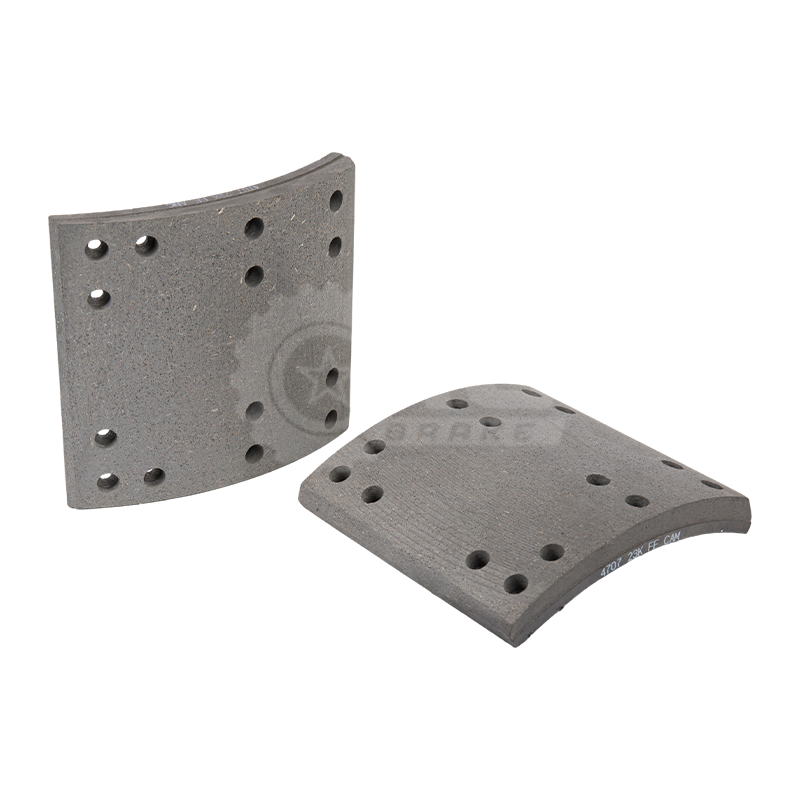 Brake Linings: American and European Specification SeriesReview specification-first brake linings for stable braking under heat, with American and European series and visible codes 4707, 4515, and 19032.View Product →
Semi-metallic earns its reputation in the heat. Metal transfers energy away from the contact patch and keeps the friction coefficient relatively stable as temperatures climb, which is why semi-metallic linings hold their stopping power on a long mountain descent or on a repeated stop-and-go route. The trade-off appears when the material is cold. The first few stops of the day can feel sharper, or in some formulations slightly less progressive, than a driver expects.
Ceramic material does the opposite. It insulates rather than conducts, so heat stays at the friction interface. On a light vehicle with modest brake loads that is an advantage: the lining reaches its working temperature quickly and stays predictable during short, low-speed trips. Under sustained heavy braking the same characteristic becomes a problem, because trapped heat accelerates fade and can degrade the binder inside the lining.
This is where ceramic wins clearly and consistently. Ceramic friction runs quieter across a wider temperature range and produces a light, non-magnetic dust that does not cling to wheels the way the dark reddish-brown residue from semi-metallic material does. For a passenger car or a fleet of light vans, that difference alone often decides the purchase.
Semi-metallic linings are generally harder on the drum or rotor. They wear the braking surface faster, but they also resist their own wear well and cope with rough, rusty or imperfectly machined surfaces. Ceramic material is kinder to the drum and usually wears more slowly itself in light-duty service, but it is less tolerant of poor surface condition and of contamination from oil or grit.
A simple rule of thumb applies here: the lighter and more predictable the duty cycle, the better ceramic performs. The heavier and more variable the load, the more semi-metallic justifies itself.
A loaded tractor-trailer has a very different thermal profile from a hatchback. Gross combination weights run from 20 to 40 tonnes and above, brake energy rises with mass, and a single descent can push lining temperatures past the point where an insulating material begins to lose grip. Air-actuated drum brakes, which still dominate the heavy end of the market, add their own characteristics. The lining presses against a large cast drum with substantial thermal mass, and the whole assembly depends on heat moving out of the friction pair efficiently.
That is why heavy-duty brake linings are almost always semi-metallic, or a carefully balanced metal-bearing formulation on grades such as 23K FF. The shoe itself is part of the heat path, which is one reason cast brake shoes remain so common on trucks and trailers: they hold their shape under thermal cycling and conduct heat away from the lining rather than trapping it.
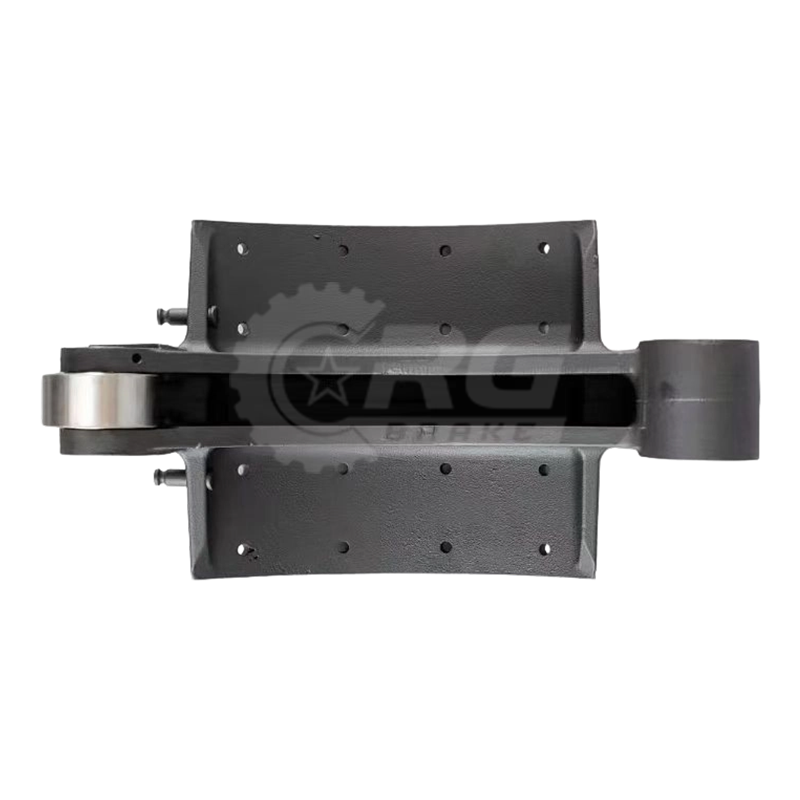 Cast Brake Shoes for Heavy-Duty Commercial VehiclesReview cast steel brake shoes for heat, pressure, and thermal cycling in demanding truck and trailer braking, with SC254, VOLVO200, and BENZ180 references.View Product →
None of this means ceramic has no heavy-duty application at all. It means the duty cycle has to justify it. A yard tractor that never exceeds walking pace, or a vehicle with long idling periods and light loads, may tolerate a ceramic or ceramic-blend lining. A long-haul truck on a mountain route will not.
The table below summarises the practical differences in the way most fleets experience them.
| Characteristic | Ceramic | Semi-Metallic |
|---|---|---|
| Typical metal content | Low to none | 30 to 65 percent by weight |
| Cold pedal feel | Progressive and consistent | Firm, sometimes sharper |
| Fade resistance when hot | Moderate | High |
| Noise | Low | Moderate, more prone to squeal |
| Visible dust | Light and non-staining | Darker and more adhesive |
| Drum or rotor wear | Gentle | More aggressive |
| Lining wear rate | Low in light duty | Low to moderate, stable under load |
| Best suited to | Passenger cars, light vans, low-speed urban duty | Trucks, trailers, buses, mountain routes, towing |
If you run a fleet of light delivery vans, service vehicles or passenger cars, ceramic friction makes a great deal of sense. Dust complaints disappear, brake noise drops, and the gentler wear on rotors often offsets the higher purchase price over the life of the vehicle. Vehicles that never see a heavy load or a long descent can run ceramic material for years without ever approaching its thermal limit.
The mistake we see most often is a fleet applying a passenger-car recommendation to a medium or heavy vehicle. The logic does not transfer, because the loads and the heat do not.
When a fleet asks us to recommend a friction material, we work through a short list of questions before naming anything. These are the ones that change the answer most often.
The last point deserves emphasis. We sell complete lined brake shoe assemblies with hardware kits alongside bare linings, because when the lining, shoe and mounting hardware are matched and pre-assembled, there is far less chance that a tired spring or a seized roller quietly undermines an otherwise sound friction choice.
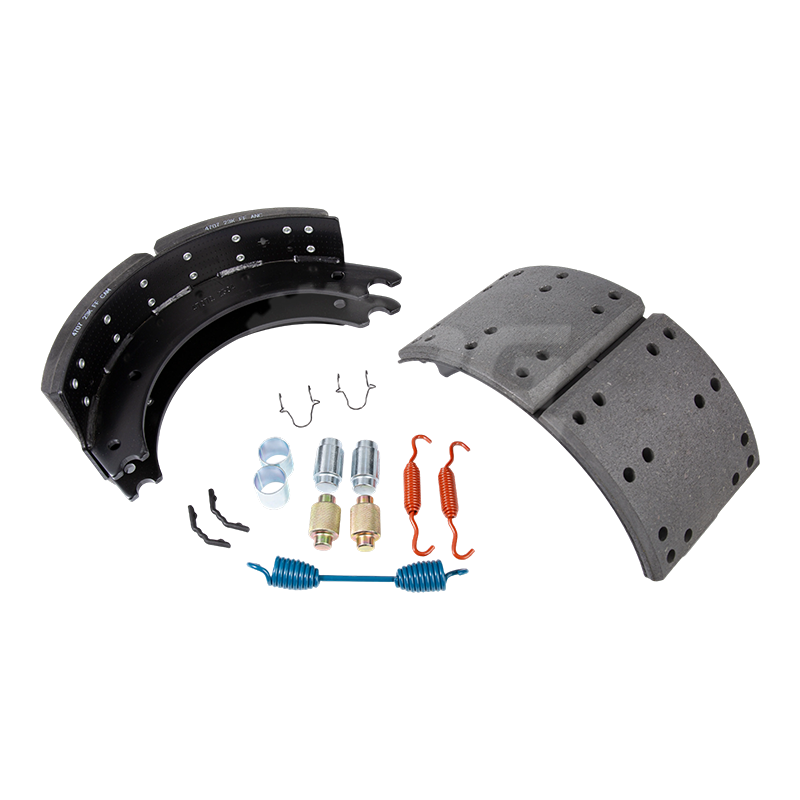 Lined Brake Shoes with Hardware KitsTwo matched brake shoe assemblies with linings and hardware simplify installation and reduce mismatches for heavy-duty commercial vehicle overhauls.View Product →
We are CRG Brake, a brake shoe and lining factory based in Deqing, Zhejiang, and our team has been working on heavy vehicle braking for more than twenty years. In that time the most useful lesson has been that friction selection is a matching problem, not a ranking problem. There is no universally best material, only a material that suits a particular vehicle, load and route.
So our process starts with the application. We look at axle load, drum condition, duty cycle and the failure the fleet is trying to fix, then work back to a formulation and a shoe type. Our in-house laboratory supports that work, and our OEM programs mean we are used to meeting a written specification rather than arguing about a preference. You can read more about our approach to friction development if you would like the detail behind it.
If you are weighing up material options for a specific fleet right now, our team has also written a maintenance-focused guide to choosing brake linings for safety that walks through the same questions from a workshop perspective.
So which one wins? For a passenger car, a light van or a low-speed urban vehicle, ceramic friction is a reasonable and often pleasant choice: quieter, cleaner and gentle on the braking surface. For a loaded truck, a trailer, a bus or anything that regularly converts large amounts of kinetic energy into heat, semi-metallic linings remain the practical answer, and they have stayed there for decades for solid physical reasons.
The useful question is not which material is better in the abstract, but which one matches the load, the route and the maintenance budget in front of you. Answer that, and the ceramic versus semi-metallic debate largely settles itself.
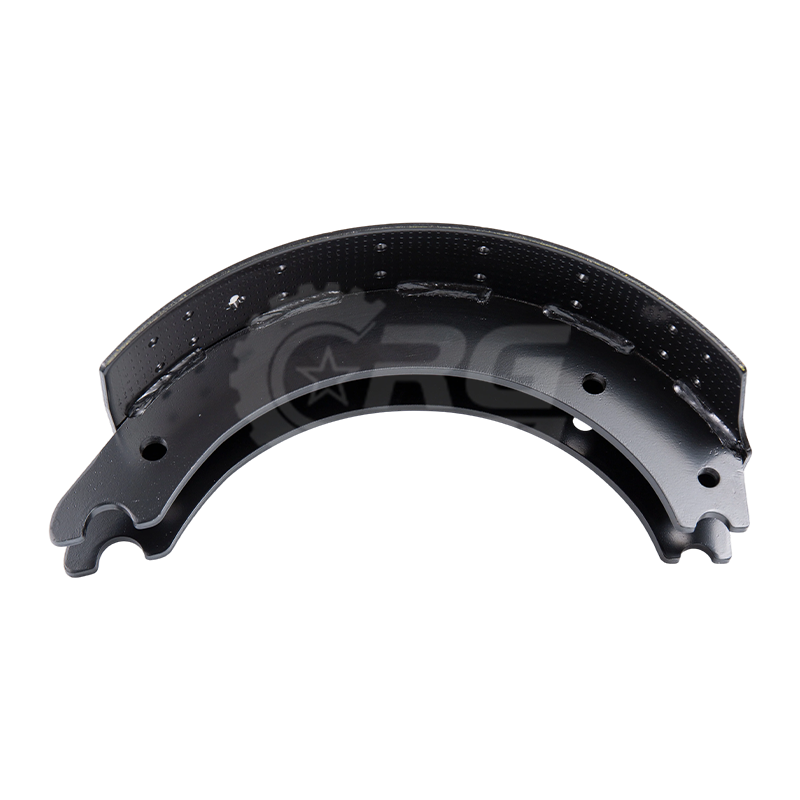
This 4707Q A19 3222 D2006 American Brake Shoes is a premium, heavy-duty replacement component specifically engineered for commercial vehicle braking s...
See Details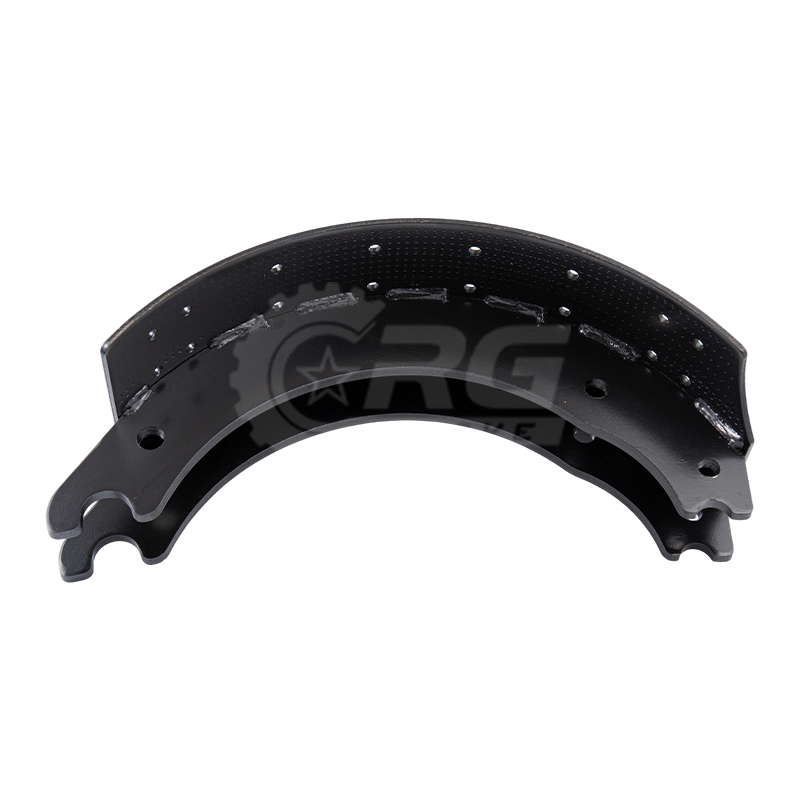
4515Q A91 3222 S1293 American Brake Shoes is a premium, high-performance replacement component meticulously engineered for use in heavy-duty braking s...
See Details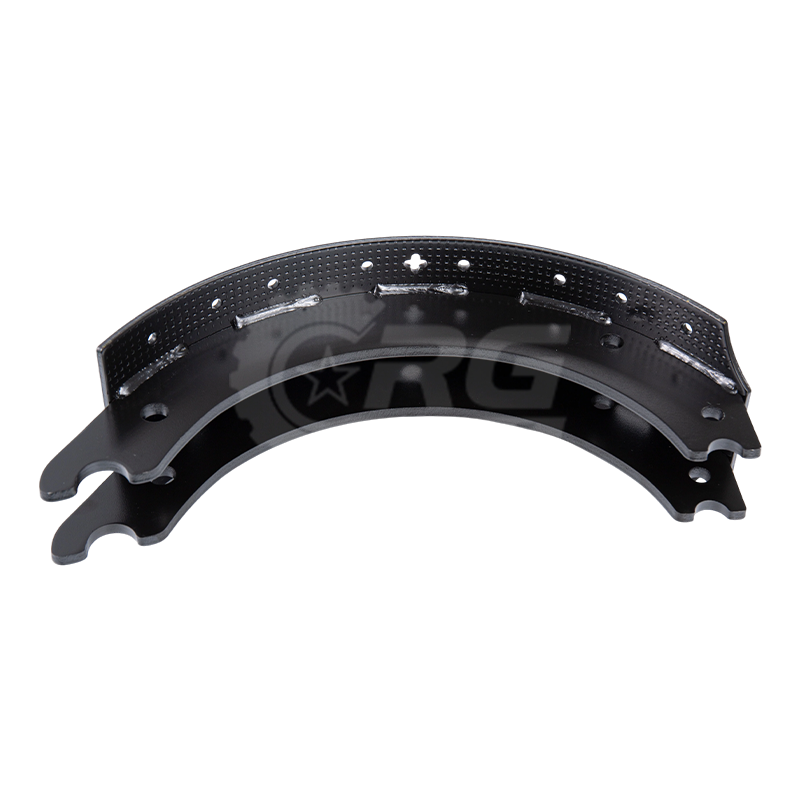
The CA33 A 3222FM61 American Brake Shoes is a high-performance, heavy-duty component specifically engineered to meet and exceed the rigorous demands o...
See Details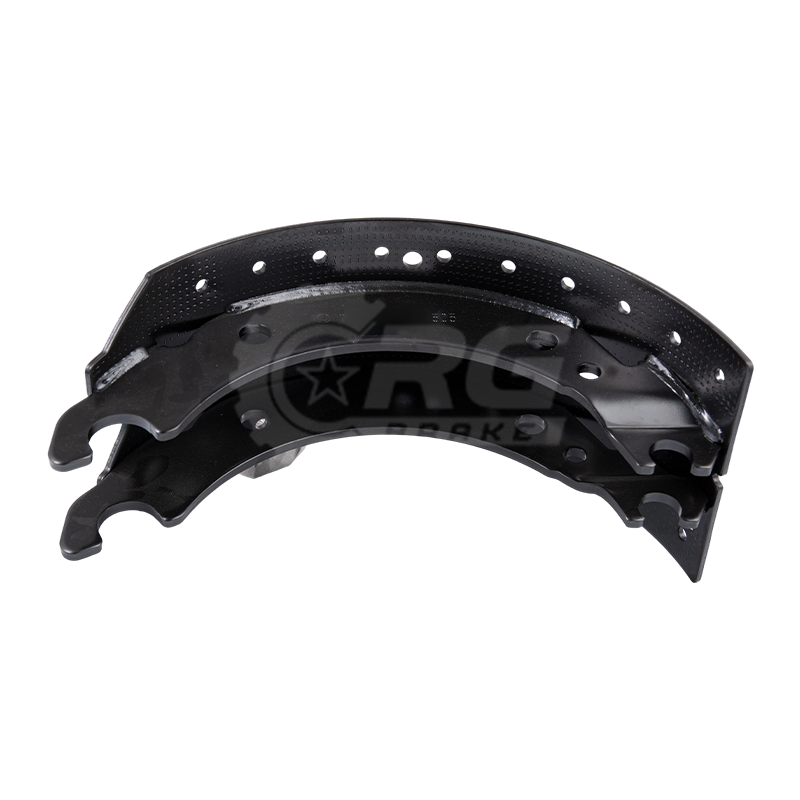
The BPW180 05.091.46.17.0 European Brake Shoes stands out as a high-performance component in commercial vehicle braking systems, trusted for its excep...
See Details
The SC254 1104545 Cast Brake Shoes is a premium-grade, high-performance braking component meticulously engineered for heavy-duty commercial vehicles. ...
See Details
The 4707 American Brake Linings are engineered to deliver outstanding braking performance, specifically designed to handle the rigorous demands of hea...
See Details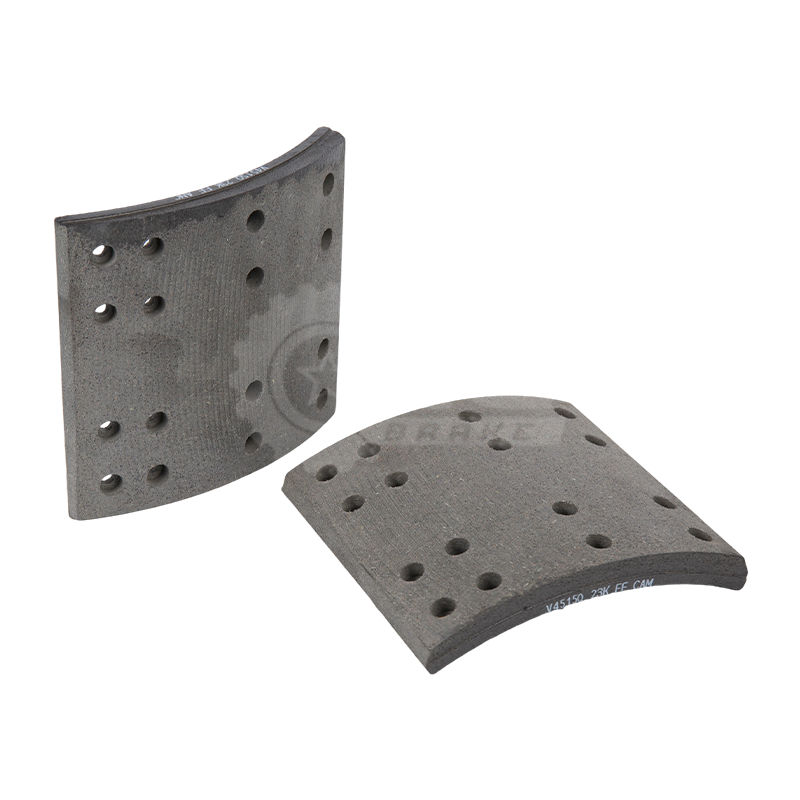
The 4515 American Brake Linings brake shoe is designed with a standard 16.5" x 7" dimension, which has been widely recognized as an optimal size for m...
See Details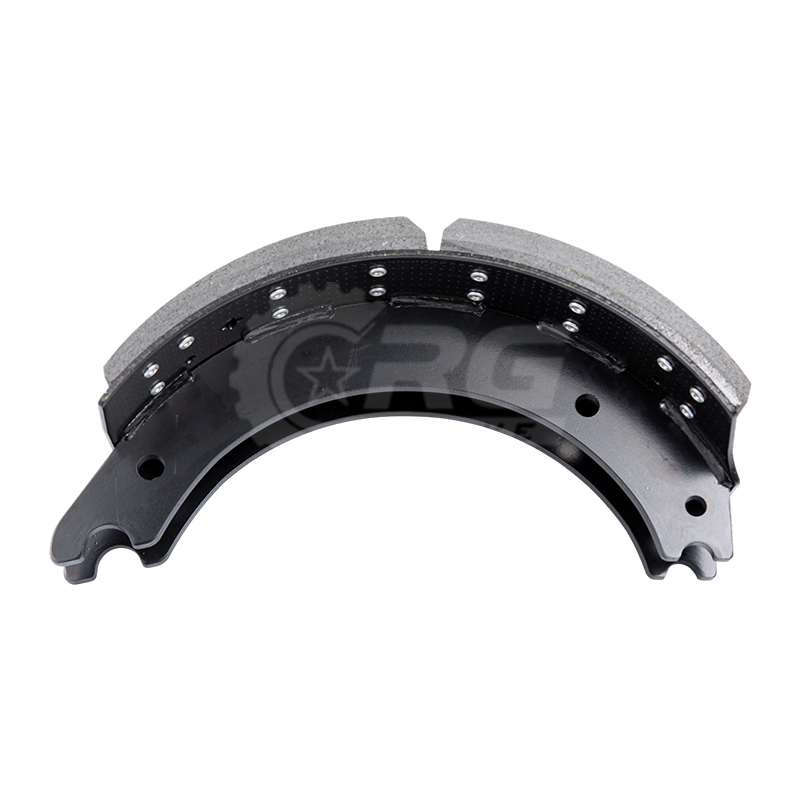
The 4707Q A19 3222 D2006 Lined Brake Shoes is specifically engineered to deliver exceptional heavy-duty braking performance, making it an ideal choice...
See Details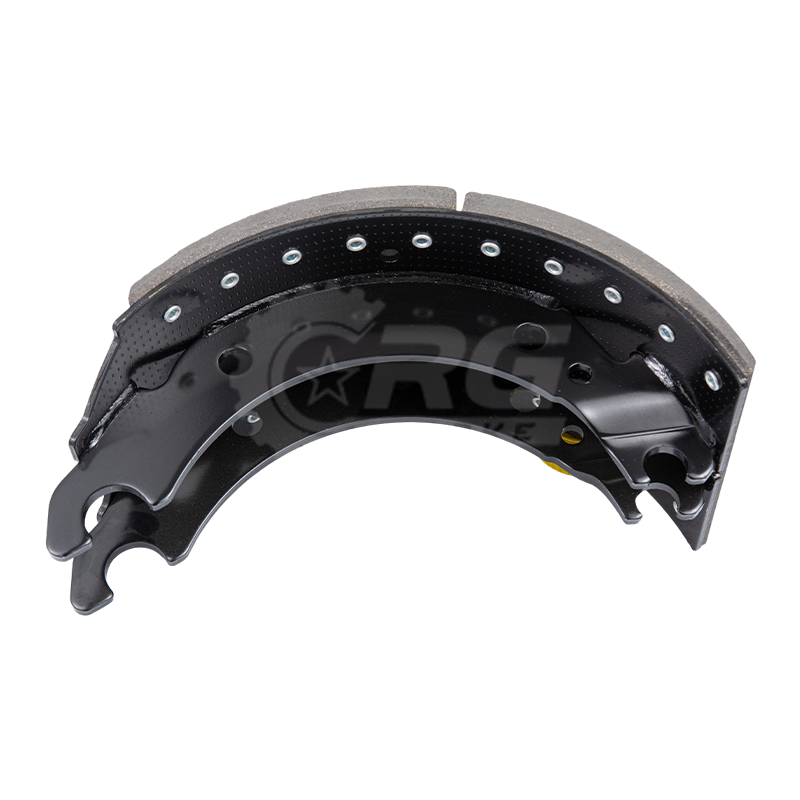
BPW200 05.091.27.83.0 Lined Brake Shoes is a premium, high-performance braking component meticulously engineered for use in commercial vehicle braking...
See Details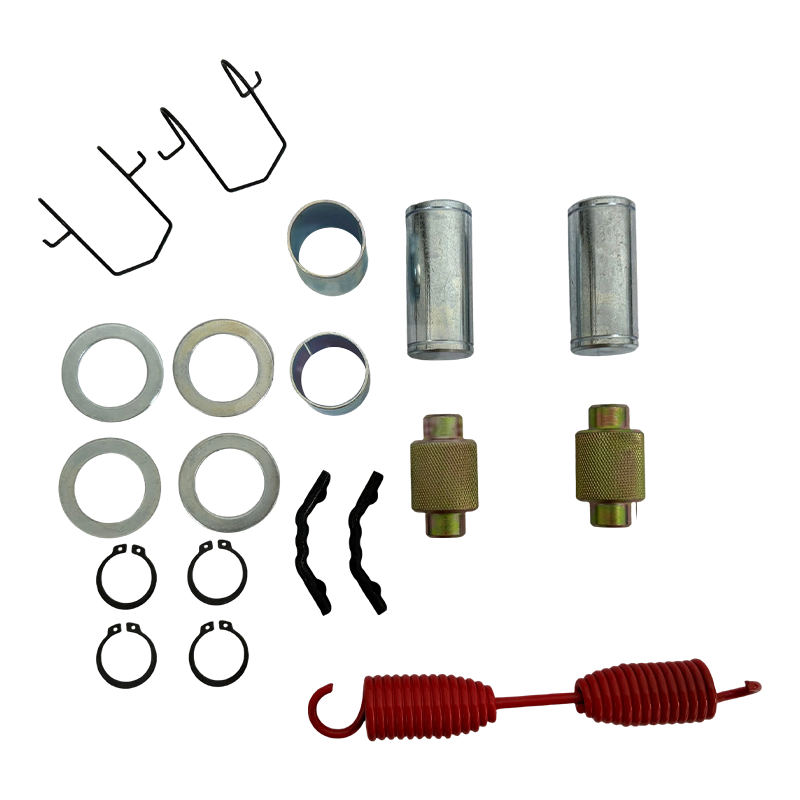
BPW NEW Brake Repair Kit represents a state-of-the-art, precision-engineered hardware solution specifically designed for the high-performance maintena...
See DetailsGet a Free (Customized) Quote

derek@crgbrake.com
vicky@crgbrake.com

 OUR Product
What’s News
Copyright © Zhejiang Courage Auto Parts Co., Ltd. All Rights
Reserved
 Commercial Vehicles CRG Brake Parts Manufacturers