

 English
  中文简体
中文简体 

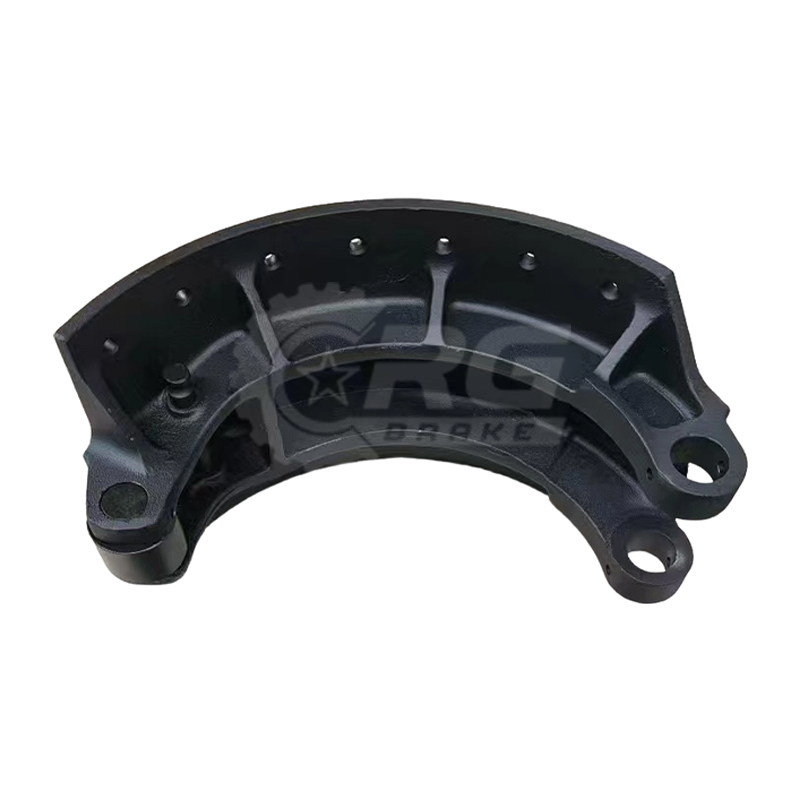
BPW180 05.091.46.17.0
The BPW180 05.091.46.17.0 European Brake Shoes stands out as a high-performance component in commercial vehicle braking systems, trusted for its excep...
See Details
Content
Cast brake shoes are most commonly produced from gray cast iron or ductile (nodular) iron, and the choice between the two has a direct effect on how the shoe performs under repeated thermal and mechanical stress. Gray iron contains graphite in flake form, which gives the material excellent thermal conductivity and natural vibration damping, both valuable properties for a component that repeatedly absorbs and dissipates frictional heat during braking. However, the flake graphite structure also makes gray iron more brittle, meaning it can crack under sudden impact loading or if the shoe is dropped or mishandled before installation.
Ductile iron, by contrast, contains graphite in spherical nodules rather than flakes, which interrupts crack propagation far more effectively and gives the material significantly higher tensile strength and impact resistance. This makes ductile iron a better choice for heavy-duty applications such as freight rail, mining equipment, or heavy commercial vehicles, where the brake shoe experiences higher mechanical shock loads in addition to thermal cycling. The tradeoff is that ductile iron typically costs more to produce and can be slightly more difficult to machine due to its higher strength, which is a practical consideration when a manufacturer is quoting large production volumes.
Brake shoes operating in high-frequency stop-start service, such as switching locomotives or mining haul trucks, experience repeated thermal cycling that can lead to heat checking, a pattern of fine surface cracks caused by the friction surface expanding and contracting faster than the shoe's core material. Adding small amounts of chromium or molybdenum to the iron composition improves resistance to heat checking by increasing the material's high-temperature strength and reducing thermal fatigue, which is why specifications for demanding braking applications often call out a specific alloy content rather than leaving the composition to standard gray iron defaults.
Because brake shoes are safety-critical components, casting defects that might be cosmetically acceptable in other iron castings can be disqualifying here. Understanding where these defects originate helps buyers evaluate a supplier's quality control process rather than relying solely on a final visual inspection.
| Defect | Typical Cause | Risk if Undetected |
| Porosity | Trapped gas or shrinkage during solidification | Reduced strength, potential crack initiation under load |
| Cold shut | Two streams of molten metal failing to fuse fully | Weak seam that can separate under thermal stress |
| Inclusions | Sand or slag entrapped in the melt | Localized weak points and uneven wear on the friction surface |
| Shrinkage cavity | Insufficient feeding of molten metal as the casting cools | Internal void that can propagate into a crack under cyclic loading |
Radiographic or ultrasonic testing on a sampling basis is the most reliable way to catch internal defects like shrinkage cavities and inclusions that would not be visible from the casting's exterior, since these defects often sit beneath the surface in the thickest sections of the shoe where cooling is slowest.
A cast brake shoe is only half the assembly; the friction lining bonded or mechanically fastened to its surface is what actually contacts the wheel or drum. The method used to attach this lining has a significant effect on how the shoe performs as the lining wears down over its service life. Riveted linings use mechanical fasteners set into countersunk holes in the shoe casting, which allows the lining to be replaced independently of the shoe body, extending the shoe's usable life across multiple lining replacements. The tradeoff is that rivet heads gradually become exposed as the lining wears, and continued use past this point can cause the rivets to score the mating surface, so riveted linings need a defined wear limit that triggers replacement before rivet contact occurs.
Bonded linings, which use a high-temperature adhesive to fix the friction material directly to the shoe casting, avoid the rivet-scoring problem entirely and can support a slightly thicker usable lining depth, since there is no rivet head sitting inside the lining material. However, the bond quality depends heavily on surface preparation of the casting before the lining is applied; any residual casting scale, oxidation, or contamination on the bonding surface can cause the lining to delaminate under the heat and vibration of service, which is a failure mode that often does not show up until the shoe has been in use for some time.
Shot blasting the casting surface before applying a bonded lining removes mill scale and creates a slightly roughened profile that improves adhesive mechanical interlock, which is a step that should not be skipped even when the casting appears visually clean, since oxidation invisible to the eye can still interfere with adhesive bonding. Suppliers who blast, degrease, and apply a bonding primer in a controlled sequence typically produce linings with more consistent bond strength than those who rely on a single blasting pass without a follow-up degreasing step.
The way a brake shoe wears over its service life provides useful diagnostic information about whether the braking system is functioning correctly, beyond simply indicating when the shoe needs replacement. Even wear across the full contact surface generally indicates proper alignment between the shoe and the drum or wheel tread, while wear concentrated at one edge of the shoe often points to misalignment, an out-of-round drum, or uneven spring tension in the actuating mechanism. Diagonal or tapered wear patterns can indicate that the shoe is not seating flush against the drum surface, which reduces effective braking contact area and can lead to overheating concentrated in the smaller area that is making contact.
Buyers sourcing cast brake shoes for regulated applications such as rail or commercial transport typically need to verify compliance with recognized testing standards rather than relying on a supplier's general quality claims. Hardness testing confirms the casting reached its intended microstructure, since a shoe that is too soft will wear rapidly while one that is too hard can become brittle and prone to cracking under impact. Tensile and impact testing on sample castings from each production batch verifies that the alloy composition and cooling rate produced the mechanical properties specified in the purchase order, rather than assuming consistency based on the alloy specification alone.
Dimensional verification matters just as much as material properties, particularly for the curvature of the shoe's friction surface, which needs to match the drum or wheel radius closely enough to achieve full contact area. A shoe cast with a radius mismatch, even a small one, will contact the drum only at its edges initially, requiring a longer break-in period before full contact is achieved and increasing wear at the contact edges during that break-in period. Requesting radius gauge verification as part of incoming inspection, rather than relying solely on visual comparison to a reference shoe, catches this dimensional issue before the shoes are installed and put into service.
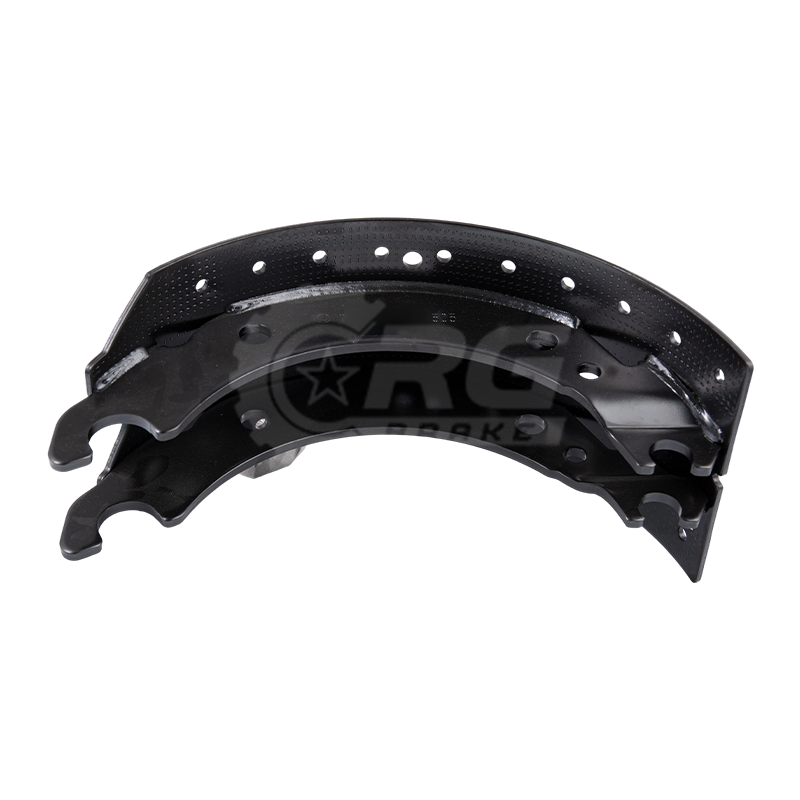
The BPW180 05.091.46.17.0 European Brake Shoes stands out as a high-performance component in commercial vehicle braking systems, trusted for its excep...
See Details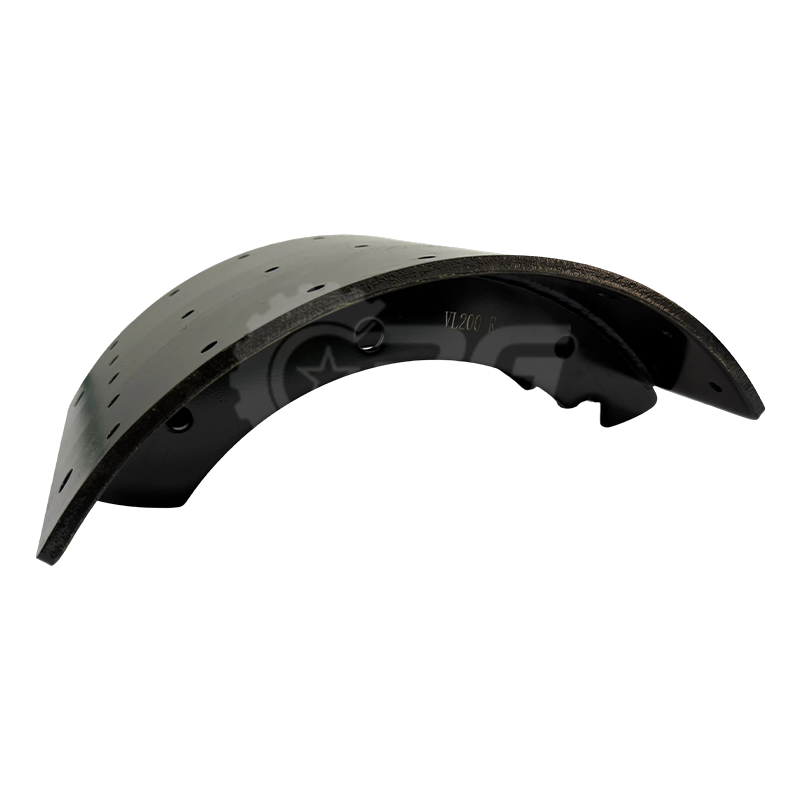
The VOLVO200 3095196 European Brake Shoes is meticulously designed and engineered to meet the demanding requirements of commercial trucks and heavy-du...
See Details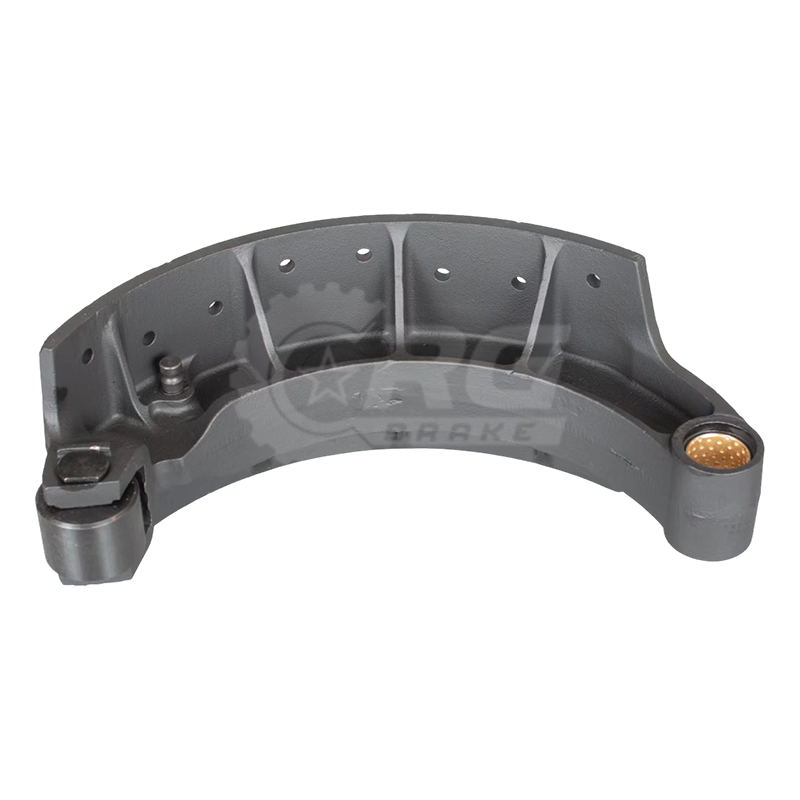
BENZ180 659 420 0619 Cast Brake Shoes, with precise dimensions of 410×180mm, is meticulously engineered to meet the rigorous demands of commercial and...
See Details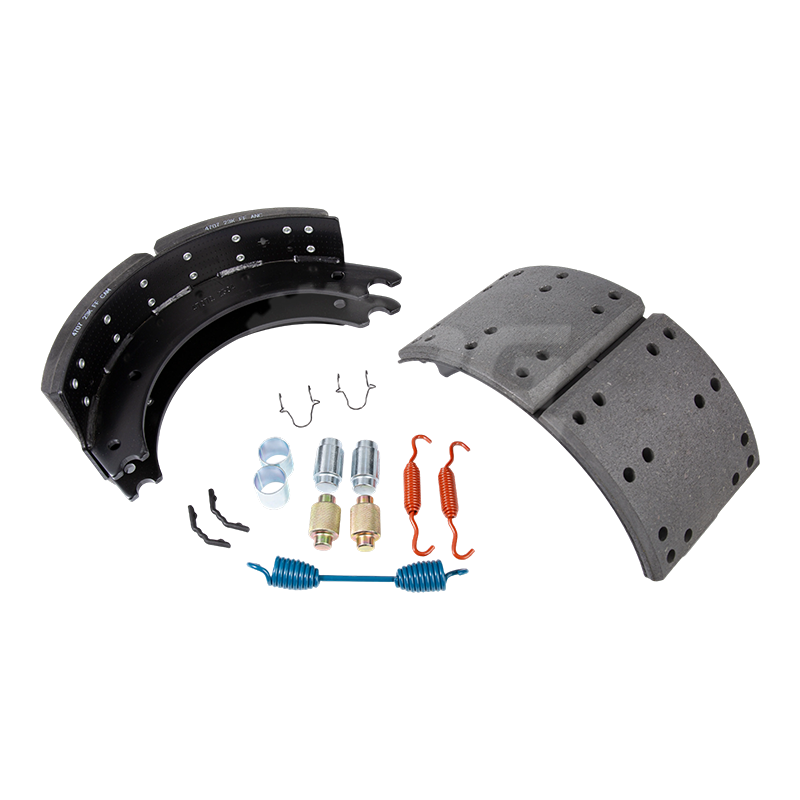
Our 4707Q A19 3222 D2006 Lined Brake Shoes With Hardware Kits are precision-engineered components measuring 16.5 inches in length and 7 inches in widt...
See Details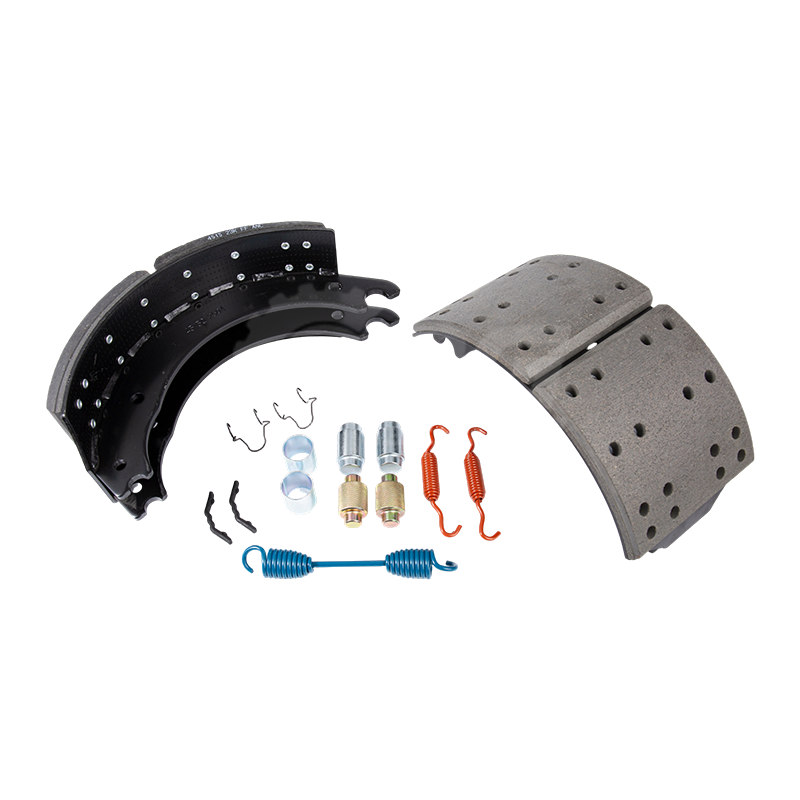
The 4515Q A91 3222 S1293 Lined Brake Shoes With Hardware Kits are expertly engineered to deliver exceptional braking performance and durability. Measu...
See Details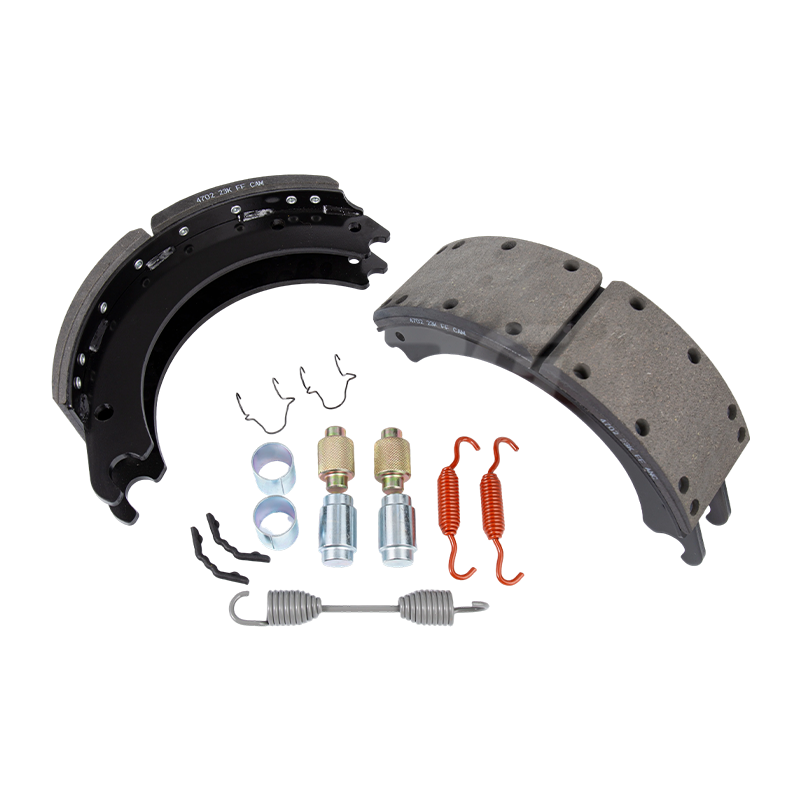
The 4702Q A3222 M2223 Lined Brake Shoes With Hardware Kits with Hardware Kits, measuring 15 inches by 4 inches, are meticulously engineered to provide...
See Details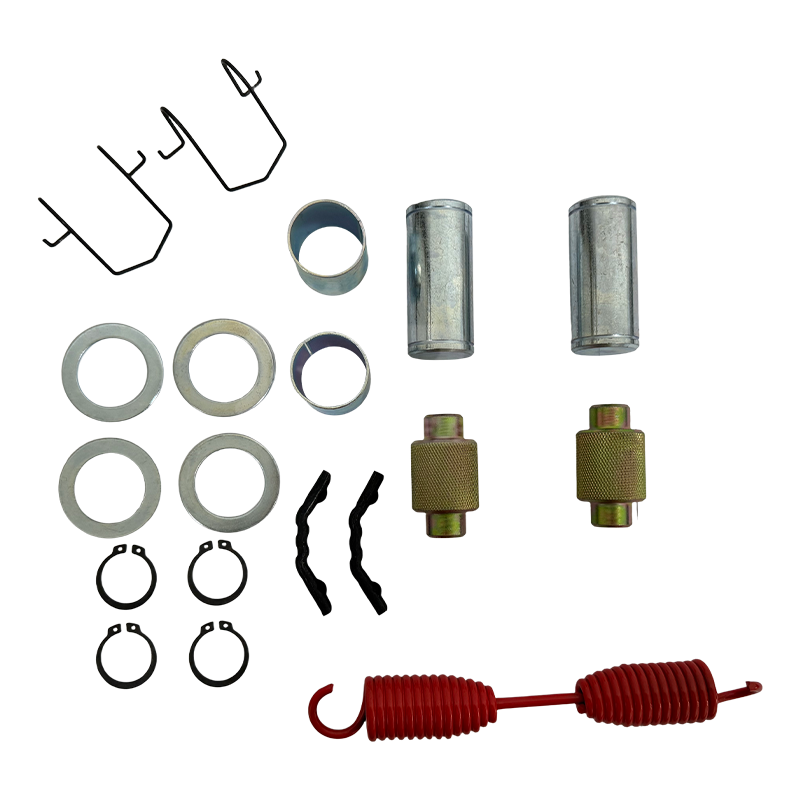
The 4515E E-1816SHD Hardware Kits, identified by the OEM number E-1816SHD, is a premium-quality hardware kit meticulously engineered for comprehensive...
See Details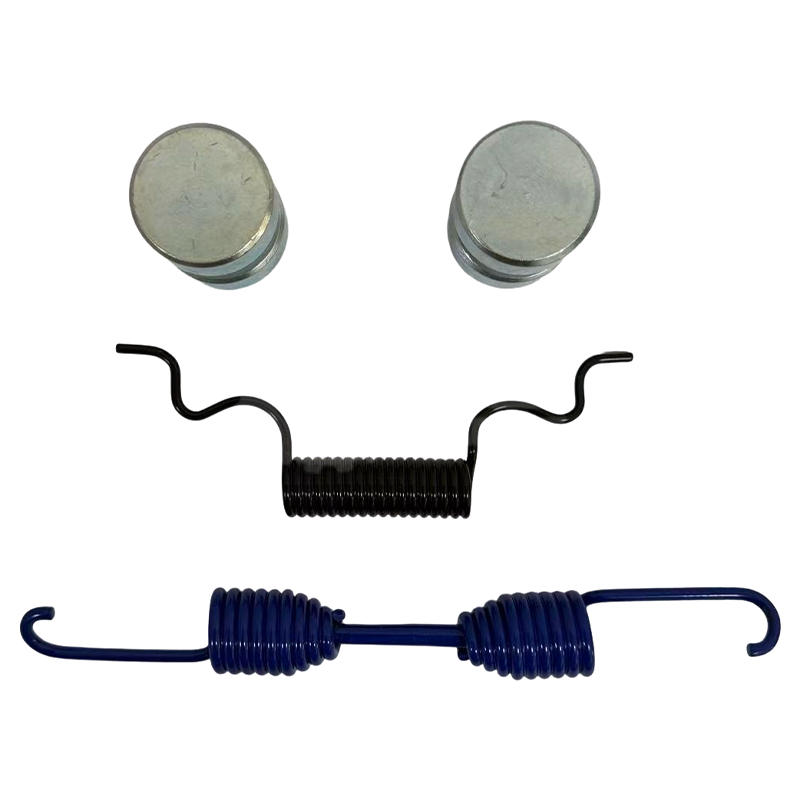
The1308E E-5139 Hardware Kits (Part No. 1308E, OEM No. E-5139) is meticulously designed to provide an effective and comprehensive solution for the res...
See Details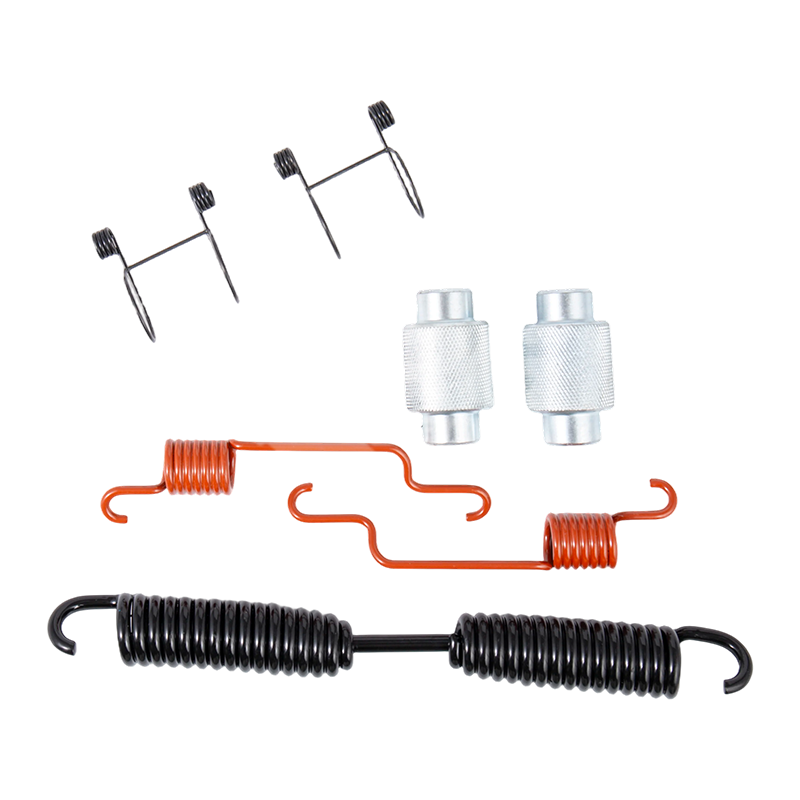
This hardware kit, model E-10244S with part number 4709ES2, is a premium-grade brake repair kit meticulously engineered for comprehensive vehicle brak...
See Details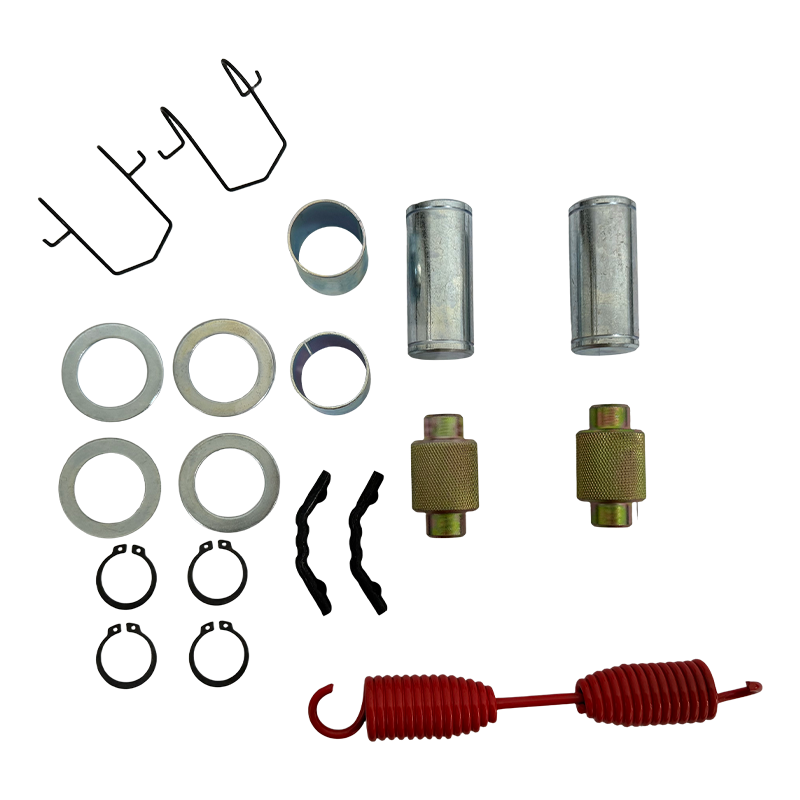
The 4515E E-1816SHD Hardware Kits, identified by the OEM Number E-1816SHD, represents a high-quality and comprehensive hardware set meticulously engin...
See DetailsGet a Free (Customized) Quote

derek@crgbrake.com
vicky@crgbrake.com

 OUR Product
What’s News
Copyright © Zhejiang Courage Auto Parts Co., Ltd. All Rights
Reserved
 Commercial Vehicles CRG Brake Parts Manufacturers